2025-10-14
Visited : 425
The results provide evidence of potential risks to animal health, meat production and also human food safety.
Plastic bags, packaging, yoghurt lids – items that are carelessly thrown away decompose over years into tiny plastic particles. They end up in soil, waterways and ultimately in our food chain. Although numerous studies have already shown that microplastics can harm marine animals, birds and insects, the effects of nanoplastics on livestock have hardly been researched to date.
Unlike microplastics (1 µm – 5 mm), there are currently few adequate methods for detecting nanoplastics (< 1 µm) in humans and animals. However, researchers assume that these small particles can also accumulate in tissue.
FBN study: Nanoplastics enter livestock cell cultures
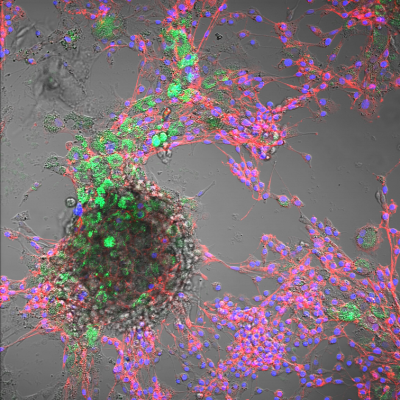
In a joint study, researchers from the FBN and the University of Udine have demonstrated that nanoplastic particles made of polystyrene are uptaken into cultured cells from cattle and pigs. This absorption led to changes that could impair the cell function and health of the animals in the long term.
"Since we still know far too little about nanoplastics and detection is difficult, our results are particularly important for better assessing the risks," explains Dr Anja Baufeld from the Cell Physiology and Reproduction working group at the FBN. "When we saw that nanoplastics were entering the cells, we knew that this could have far-reaching consequences," Baufeld continues.
Possible consequences for fertility and meat production
The study examined granulosa cells from cattle, which play an important role in reproduction, and myoblasts from pigs, which are used to form muscle tissue. Even low concentrations led to microscopically visible accumulations. These could impair the fertility of the animals and their products.
Risks to humans cannot be ruled out
Farm animals are part of the human food chain. Direct health risks to consumers cannot be inferred at present. Nevertheless, the researchers urge for more detailed investigations into the long-term consequences of microplastics and nanoplastics.
"Our research shows that nanoplastics are not only an environmental problem, but could also have direct consequences for the health of farm animals. These initial findings highlight the importance of conducting more intensive research into plastic pollution in order to assess the potential risks to both animals and humans at an early stage," says Baufeld.
Read the original article on Research Institute for Farm Animal Biology (FBN).