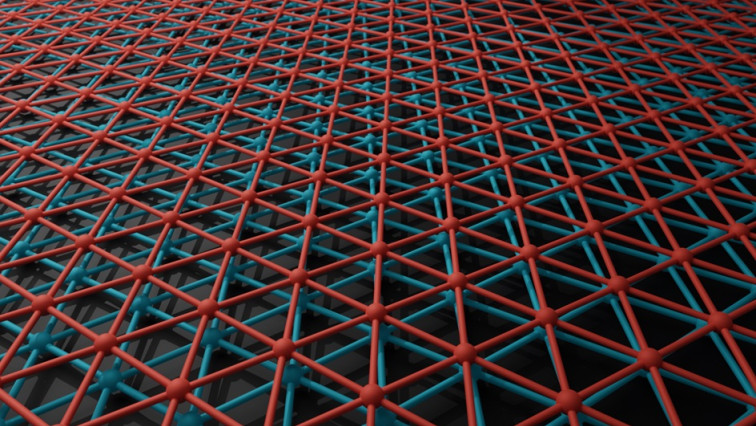
When two mesh screens or fabrics are overlapped with a slight offset, moiré patterns emerge as a result of interference caused by the misalignment of the grids. While these patterns are commonly recognized as optical illusions in everyday life, their significance extends to the nanoscale, such as in materials like graphene, where they can profoundly influence electronic properties. This phenomenon opens new avenues for advancements in areas, like superconductivity and quantum effects. Traditionally, controlling the length scales of moiré patterns has been challenging due to the fixed nature of atomic structures, which limits the ability to fine-tune electronic properties.
A research team, led by Professor Wonyoung Choe in the School of Energy and Chemical Engineering at UNIST has demonstrated, for the first time, the ability to precisely control over moiré periods by stacking metal-organic frameworks (MOFs) layers—crystalline materials composed of metal clusters linked by organic molecules. Published today in Nature Communications, this study introduces a chemically programmable platform for engineering moiré systems with customized length scales, opening new avenues in the fields of twistronics, photonics, and quantum information science.
By varying the length of organic linkers in zirconium-based two-dimensional (2D) MOFs and stacking these layers at a range of twist angles, the team achieved precise modulation of moiré periodicity dictated by ligand lengths. Molecular dynamics simulations from Professor Jihan Kim’s team at Korea Advanced Institute of Science and Technology (KAIST) confirmed the energetic stability of the bilayer MOFs and identified preferred stacking configurations, aligning with experimental observations.
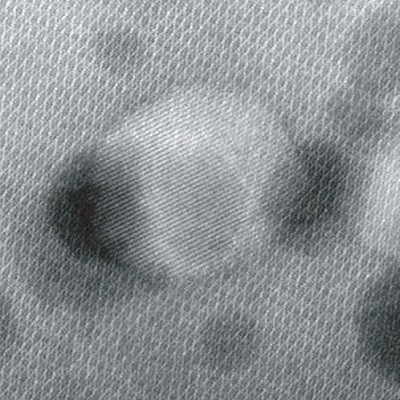
A particularly notable finding was the emergence of dodecagonal quasiperiodic patterns at a 30° twist angle—exhibiting 12-fold rotational symmetry. Visualized via high-resolution transmission electron microscopy (TEM) and modeled through Stampfli tiling, these complex patterns are quasiperiodic in nature and have the potential to subtly influence electron behavior.
Jiyeon Kim, a postdoctoral fellow and first author, remarked, “Quasiperiodic patterns without repeating units can introduce subtle modulations in electron behavior.” She added, “This opens new avenues for precisely tuning the electronic and optical properties of moiré materials.”
Professor Wonyoung Choe emphasized, “MOFs serve as tunable molecular frameworks—an effective ‘dial’ for adjusting lattice spacing—and this platform will accelerate the development of next-generation twistronic and quantum devices.”
Read the original article on Ulsan National Institute of Science and Technology (UNIST).