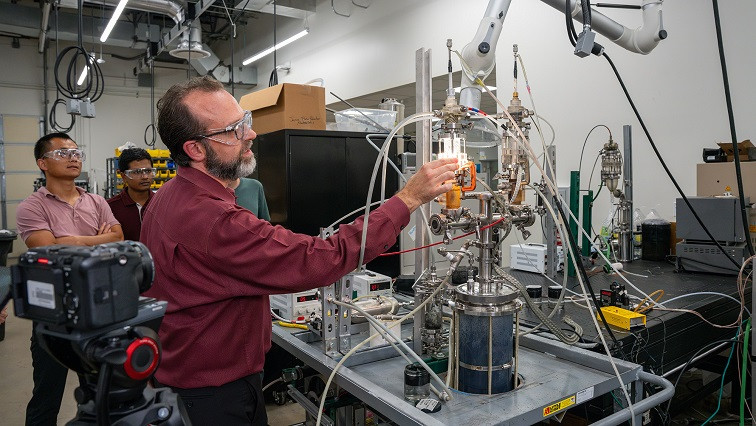
The research, published in the journal Nature Communications, demonstrates how graphene oxide can be synthesized using methane and a nonthermal plasma-water interface, offering a potentially lower-cost and more scalable alternative to conventional production methods.
Led by Dr. David Staack, associate professor and deputy vice chancellor for research, the team developed a process that uses an electrical plasma discharge to convert methane — the primary component of natural gas — into high-purity graphene oxide while simultaneously producing hydrogen as a byproduct.
The discovery emerged unexpectedly during a project that initially focused on hydrogen production.
“When we started this work, hydrogen was the product and carbon was the byproduct,” Staack said. “As we continued the research, we realized the carbon material we were producing was actually one of the most valuable outcomes.”
Unlike conventional methods, this process creates graphene oxide directly from methane rather than mined graphite.
“Most graphene oxide today is produced from graphite through chemically intensive processes,” Staack said. “We’re taking a very different approach. Instead of starting with a bulk material and breaking it apart, we’re building the material from methane molecules.”
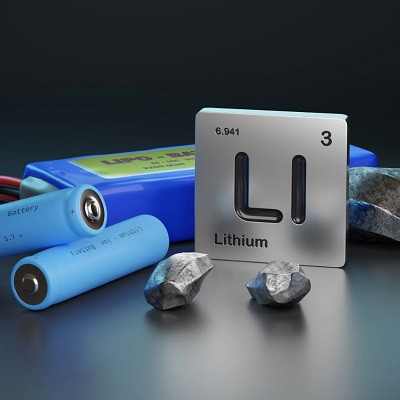
Graphene oxide is a single-atom-thick carbon material valued for its conductivity, strength and versatility. It is commonly used in energy storage technologies, including lithium-ion batteries, as well as coatings, composites and other advanced materials.
Traditional production methods rely heavily on graphite, much of which is sourced outside the United States. According to Staack, domestic supply chains for graphite and graphite-derived materials remain limited, creating interest in alternative production pathways.
The project brought together researchers from multiple disciplines, including Dr. Micah Green, professor and associate department head of chemical engineering and co-principal investigator on the project. Green’s expertise in carbon nanomaterials helped the team characterize the material and evaluate its potential applications.
“This is the first scalable production of graphene oxide from natural gas precursors ever reported,” Green said. “This is part of a new push by industry to produce high-value carbon nanomaterials from petrochemical sources. Instead of carbon emissions, carbon is rerouted to form solid functional materials.”
Green noted that graphene oxide is particularly valuable because it can be dispersed in water, enabling its incorporation into coatings, inks and other advanced manufacturing applications.
The Texas A&M team’s process could help address that challenge by using abundant domestic natural gas resources as a feedstock.
The researchers found that the graphene oxide produced through the plasma process exhibits properties comparable to commercially available graphene oxide while offering the potential for significantly lower production costs. The study demonstrated a scalable approach capable of producing high-purity, single-layer graphene oxide under atmospheric conditions.
The discovery also highlights how industry-sponsored research can accelerate the transition of university research into real-world technologies. The work was supported by College Station-based energy company LTEOIL.
The collaboration allowed researchers to explore technologies aimed at improving hydrogen production while finding new ways to create value from hydrocarbons.
“I believe that we as a university have a responsibility to develop and transition science into useful technology that benefits our state,” Green said. “Industry looks to the university to find out what is possible and how it can change the way we do business. This paper is a great example of that technology transition.”
Howard B. Jemison ‘86, CTO of LTEOIL, said the technology could help create more efficient and sustainable manufacturing pathways for advanced materials.
“The traditional methods of graphene oxide production from mined graphite require harsh chemicals, so the ability to make high-quality graphene oxide using only electricity, natural gas and water under mild conditions can change this market,” Jemison said.
Beyond producing a valuable advanced material, the process generates hydrogen while minimizing carbon emissions. Rather than converting carbon into carbon dioxide, the system transforms it into graphene oxide that can be used in batteries, composites and other products.
“This is a pathway to create energy and advanced materials at the same time,” Staack said. “The goal is to develop solutions that make economic sense while also reducing emissions.”
The researchers believe the technology could help support future domestic production of carbon nanomaterials while creating new opportunities in energy storage, electronics and advanced manufacturing.
Read the original article on Texas A&M University.