
According to the collaborators, the findings have two key implications for the viability of using QKD to secure communications against attack by quantum computers at a commercial level. First, the development shows that the commercially available equipment evaluated by Toshiba and Orange is successful at allowing QKD to be more effectively deployed on current fiber networks. The findings stem from joint tests using Toshiba’s commercially available QKD technology.
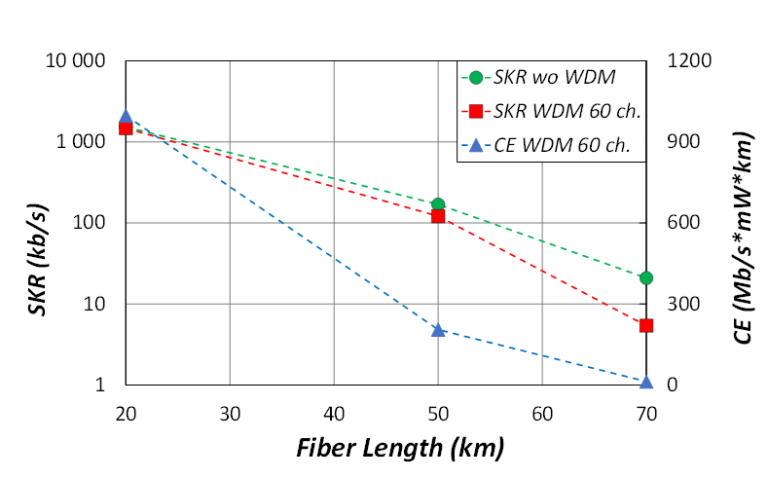
Second, the metric developed by the researchers, which acknowledges that power and not the number of channels has the primary impact on efficiency, may aid operators in network and service planning.
The findings as a whole could help network operators reduce the cost of implementing QKD by removing the need to invest in dedicated quantum fiber infrastructure.
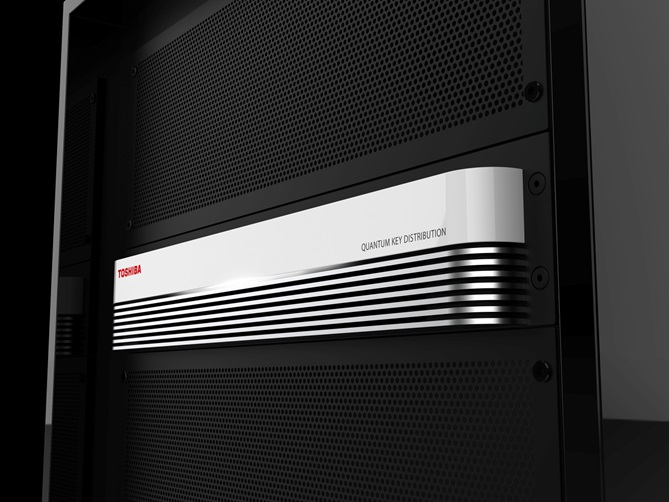
The continued advancement and commercialization of quantum computing poses security risks to current methods of public key encryption, which are likely to be rendered insufficient. Toshiba’s QKD aims to provide protection against the power of future quantum computers. Previously, this required network operators to invest in dark fiber across their network specifically for sending quantum information, increasing the cost and time to adoption.

Toshiba and Orange began tests last year to validate the coexistence of QKD and classical data signals and study how different factors affect the efficiency of sending both classical and quantum signals over existing fiber networks running classical data services. The researchers demonstrated and evaluated a 1310-nm quantum channel multiplexed with up to 60 data channels (each carrying 100-Gbit/s bit rate) in the telecommunication C band across a commercially available Toshiba QKD system.
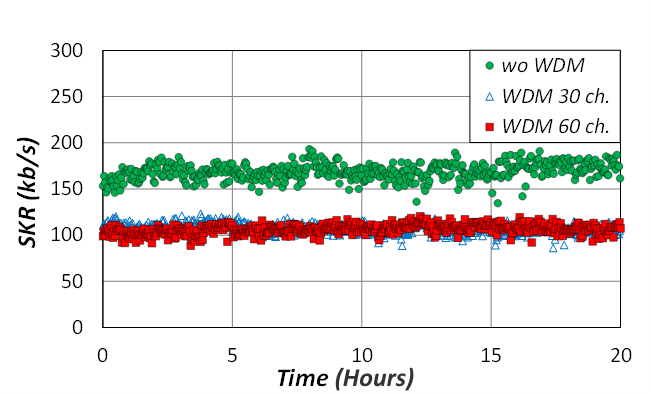
The system’s novel design, which included high-extinction spectral filters and time-domain gating used to help isolate the quantum signal and reduce noise introduced from the classical channels, enabled the researchers to multiplex classical data while retaining excellent QKD performance.

Orange and Toshiba proposed a new metric, co-propagation efficiency (CE), which can estimate the performance of the QKD system (its ability to deliver secure keys successfully with a good SKR) in a co-propagation regime while considering the total power of the classical channels and the transmission distances.
The research was presented by Erwan Pincemin from Orange Innovation division in France at OFC 2023, held March 5-9 in San Diego (www.doi.org/10.48550/arXiv.2305.13742).
