
| Date | 20th, Jun 2023 |
|---|
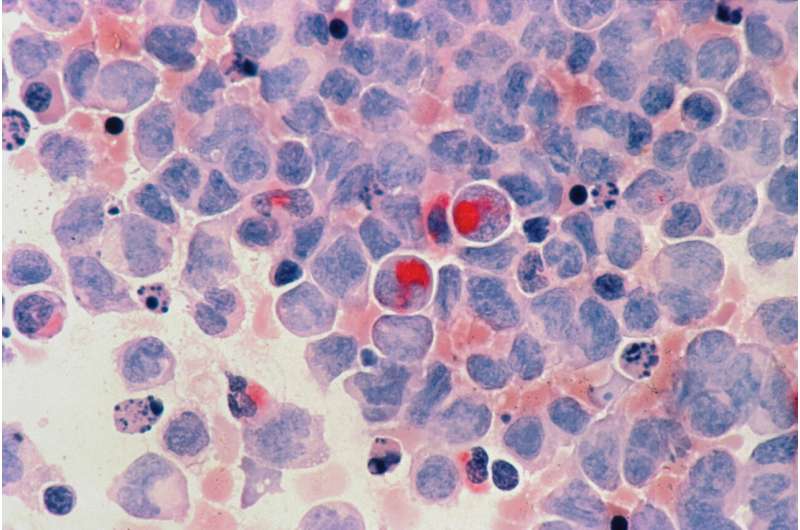 Credit: Unsplash/CC0 Public Domain
A pilot study at University of California San Diego School of Medicine debuts a novel method to monitor the survival of a cancer cell therapy using a fluorine-based nanoemulsion agent to "tag" cells prior to patient infusion. The tag enables magnetic resonance imaging (MRI) detection of a cell therapy product (i.e. engineered T cells) post-delivery.
The study publishes June 20, 2023 in Journal for ImmunoTherapy of Cancer and was led by Eric Ahrens, Ph.D., professor of radiology at UC San Diego School of Medicine.
This technology opens the door for real-time monitoring of cellular graft health in any type of adoptive cell therapy. The findings may be useful for cell product developers and clinicians alike.
More information: Eric T Ahrens et al, Method for estimation of apoptotic cell fraction of cytotherapy using in vivo fluorine-19 magnetic resonance: pilot study in a patient with head and neck carcinoma receiving tumor-infiltrating lymphocytes labeled with perfluorocarbon nanoemulsion, Journal for ImmunoTherapy of Cancer (2023). DOI: 10.1136/jitc-2023-007015
Citation: New diagnostic imaging tool monitors fate of cell therapies in cancer patients (2023, June 20) retrieved 9 July 2023 from https://medicalxpress.com/news/2023-06-diagnostic-imaging-tool-fate-cell.html
This document is subject to copyright. Apart from any fair dealing for the purpose of private study or research, no part may be reproduced without the written permission. The content is provided for information purposes only.
