
FLUCS is induced by mid-infrared laser scanning of a temperature spot through a sample. An advantage of FLUCS is its ability to generate directional flows with highly reduced invasiveness. However, localized laser scanning can inflict temperature perturbations of several Kelvins on a sample. This modulation could affect systems that are highly sensitive to heat — such as thermosensitive mammalian cells — and elicit unintended biological responses.
Scientists at Karlsruhe Institute of Technology (KIT) led by Moritz Kreysing have developed nearly isothermal scan sequences that exploit symmetry relations during laser scanning to disentangle laser heating and flow induction. The researchers’ flow-neutral scan sequences use dynamic photothermal stimuli and spatiotemporal symmetry relations of scanning bridging up to three distinct timescales.
According to the researchers, the results enable the separation of the two classes of physical stimuli — previously tightly linked — to introduce a less invasive standard for performing FLUCS perturbations.
The technology, called isothermal-FLUCS (ISO-FLUCS), charts a path for soft matter and biomedicine applications. The researchers believe that ISO-FLUCS will replace FLUCS as the standard for laser-induced optical micromanipulations in the most sensitive samples.
In the medium term, the researchers said, they foresee ISO-FLUCS supporting medical use cases like laser-assisted human reproductive medicine.
The researchers used previously disregarded degrees of freedom that accompany the optical generation of flow fields to show a step-by-step optical strategy to disentangle laser-induced flows and heating. In the approach, the temperature distribution is homogenized over the region of interest by introducing additional counter-directed paths, which are symmetrically arranged around the desired trajectory. The researchers obtained locally homogeneous temperature distributions while inducing directional flows with flow lines that were largely unaltered compared to standard FLUCS.
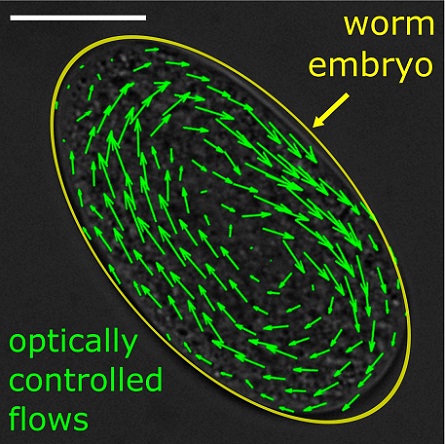

The researchers believe that ISO-FLUCS will advance flow-driven microrheology by eliminating any temperature-dependent material responses caused by the measurements. As ISO-FLUCS operates over a very narrow temperature range that can be extremely well controlled, the researchers further believe it will find use in the study of temperature-sensitive polymeric or particulate hydrogels. The fine temperature control in ISO-FLUCS can also be used to further investigate the spinodal decomposition of many systems that exhibit a high propensity toward phase separation.
The research was published in eLight (www.doi.org/10.1186/s43593-023-00049-z).
