
Posted: Oct 03, 2018
(Nanowerk News) Three articles published recently in the framework of the European Project ‘NanoRestArt’ endorse the new, fast and non-invasive diagnostic tool developed at CiQUS for the conservation of artworks, capable of detecting signs of degradation in oil paintings and plastic-based sculptures.
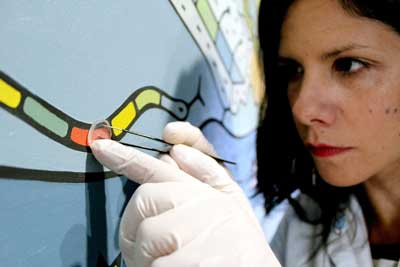 The new diagnostic tool allows alerting about risks of degradation in sculptures and oil paintings. (Photo: Andrés Ruiz / CiQUS)
Organic matter oxidizes. In contact with oxygen, light and other environmental factors, matter constituting living beings (such as plants, animals and ourselves), sooner or later, suffers from a degradation process implicating loss of material.
In the art sector material loss is not an exception. The oxidation phenomenon rarely can be separated from the creative process, where frequently organic materials are employed in different disciplines. The oil paint technique itself is based on the combination of oils derived from plants with pigments. Similarly, contemporary art sculptures made out of polymers (plastics), known for their rapid decay, are already displaying alarming signs of early degradation.
Currently, the strategy followed by conservators and museums to avoid and minimize damages is focused on preventive conservation measures, through monitoring and documentation of the deterioration risks affecting the artworks. However, the methods to determine the ideal timing to proceed with restoration interventions are still too rudimentary and invasive, since consistent material sampling for subsequent analysis is required, implying potential minor or major damage for the artifacts.
The new diagnostic tool allows alerting about risks of degradation in sculptures and oil paintings. (Photo: Andrés Ruiz / CiQUS)
Organic matter oxidizes. In contact with oxygen, light and other environmental factors, matter constituting living beings (such as plants, animals and ourselves), sooner or later, suffers from a degradation process implicating loss of material.
In the art sector material loss is not an exception. The oxidation phenomenon rarely can be separated from the creative process, where frequently organic materials are employed in different disciplines. The oil paint technique itself is based on the combination of oils derived from plants with pigments. Similarly, contemporary art sculptures made out of polymers (plastics), known for their rapid decay, are already displaying alarming signs of early degradation.
Currently, the strategy followed by conservators and museums to avoid and minimize damages is focused on preventive conservation measures, through monitoring and documentation of the deterioration risks affecting the artworks. However, the methods to determine the ideal timing to proceed with restoration interventions are still too rudimentary and invasive, since consistent material sampling for subsequent analysis is required, implying potential minor or major damage for the artifacts.
The new diagnostic tool allows alerting about risks of degradation in sculptures and oil paintings. (Photo: Andrés Ruiz / CiQUS)
Organic matter oxidizes. In contact with oxygen, light and other environmental factors, matter constituting living beings (such as plants, animals and ourselves), sooner or later, suffers from a degradation process implicating loss of material.
In the art sector material loss is not an exception. The oxidation phenomenon rarely can be separated from the creative process, where frequently organic materials are employed in different disciplines. The oil paint technique itself is based on the combination of oils derived from plants with pigments. Similarly, contemporary art sculptures made out of polymers (plastics), known for their rapid decay, are already displaying alarming signs of early degradation.
Currently, the strategy followed by conservators and museums to avoid and minimize damages is focused on preventive conservation measures, through monitoring and documentation of the deterioration risks affecting the artworks. However, the methods to determine the ideal timing to proceed with restoration interventions are still too rudimentary and invasive, since consistent material sampling for subsequent analysis is required, implying potential minor or major damage for the artifacts.
