
| Date | 4th, Jan 2020 |
|---|
Home > Press > A quantum breakthrough brings a technique from astronomy to the nano-scale: Multi-messenger approach allows scientists to probe electronic and magnetic materials at ultra-small length scales
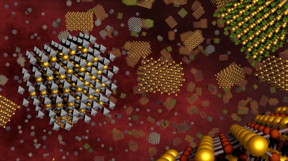 The discovery of multi-messenger nanoprobes allows scientists to simultaneously probe multiple properties of quantum materials at nanometer-scale spatial resolutions.
CREDIT
Ella Maru Studio
The discovery of multi-messenger nanoprobes allows scientists to simultaneously probe multiple properties of quantum materials at nanometer-scale spatial resolutions.
CREDIT
Ella Maru Studio
Abstract: Researchers at Columbia University and University of California, San Diego, have introduced a novel "multi-messenger" approach to quantum physics that signifies a technological leap in how scientists can explore quantum materials.
New York, NY | Posted on January 3rd, 2020
The findings appear in a recent article published in Nature Materials, led by A. S. McLeod, postdoctoral researcher, Columbia Nano Initiative, with co-authors Dmitri Basov and A. J. Millis at Columbia and R.A. Averitt at UC San Diego.
"We have brought a technique from the inter-galactic scale down to the realm of the ultra-small," said Basov, Higgins Professor of Physics and Director of the Energy Frontier Research Center at Columbia. Equipped with multi-modal nanoscience tools we can now routinely go places no one thought would be possible as recently as five years ago."
The work was inspired by "multi-messenger" astrophysics, which emerged during the last decade as a revolutionary technique for the study of distant phenomena like black hole mergers. Simultaneous measurements from instruments, including infrared, optical, X-ray and gravitational-wave telescopes can, taken together, deliver a physical picture greater than the sum of their individual parts.
The search is on for new materials that can supplement the current reliance on electronic semiconductors. Control over material properties using light can offer improved functionality, speed, flexibility and energy efficiency for next-generation computing platforms.
Experimental papers on quantum materials have typically reported results obtained by using only one type of spectroscopy. The researchers have shown the power of using a combination of measurement techniques to simultaneously examine electrical and optical properties.
The researchers performed their experiment by focusing laser light onto the sharp tip of a needle probe coated with magnetic material. When thin films of metal oxide are subject to a unique strain, ultra-fast light pulses can trigger the material to switch into an unexplored phase of nanometer-scale domains, and the change is reversible.
By scanning the probe over the surface of their thin film sample, the researchers were able to trigger the change locally and simultaneously manipulate and record the electrical, magnetic and optical properties of these light-triggered domains with nanometer-scale precision.
The study reveals how unanticipated properties can emerge in long-studied quantum materials at ultra-small scales when scientists tune them by strain.
"It is relatively common to study these nano-phase materials with scanning probes. But this is the first time an optical nano-probe has been combined with simultaneous magnetic nano-imaging, and all at the very low temperatures where quantum materials show their merits," McLeod said. "Now, investigation of quantum materials by multi-modal nanoscience offers a means to close the loop on programs to engineer them."
###
The study, "Multi-messenger nanoprobes of hidden magnetism in a strained manganite," was developed with support from Programmable Quantum Materials, an Energy Frontier Research Center funded by the United States Department of Energy (DOE), Office of Science and Basic Energy Sciences.
####
For more information, please click here
Contacts:Carla Cantor
212-854-5276
@columbia
Copyright © Columbia University
If you have a comment, please Contact us.
Issuers of news releases, not 7th Wave, Inc. or Nanotechnology Now, are solely responsible for the accuracy of the content.
Bookmark:


Imaging
 An artificial intelligence probe help see tumor malignancy July 1st, 2022
News and information
Two opposing approaches could give lithium-sulfur batteries a leg up over lithium-ion July 1st, 2022
Efficiently processing high-quality periodic nanostructures with ultrafast laser July 1st, 2022
Photonic synapses with low power consumption and high sensitivity are expected to integrate sensing-memory-preprocessing capabilities July 1st, 2022
Physics
Flexing the power of a conductive polymer: A new material holds promise for the next generation of organic electronics June 24th, 2022
Quantum Physics
Quantum network nodes with warm atoms June 24th, 2022
University of Illinois Chicago joins Brookhaven Lab's Quantum Center June 10th, 2022
Bumps could smooth quantum investigations: Rice University models show unique properties of 2D materials stressed by contoured substrates June 10th, 2022
Govt.-Legislation/Regulation/Funding/Policy
Solving the solar energy storage problem with rechargeable batteries that can convert and store energy at once June 24th, 2022
Boron nitride nanotube fibers get real: Rice lab creates first heat-tolerant, stable fibers from wet-spinning process June 24th, 2022
UBCO researchers change the game when it comes to activity tracking: Flexible, highly sensitive motion device created by extrusion printing June 17th, 2022
University of Illinois Chicago joins Brookhaven Lab's Quantum Center June 10th, 2022
Possible Futures
Sieving carbons: Ideal anodes for high-energy sodium-ion batteries July 1st, 2022
An artificial intelligence probe help see tumor malignancy July 1st, 2022
Photon-controlled diode: an optoelectronic device with a new signal processing behavior July 1st, 2022
Discoveries
Sieving carbons: Ideal anodes for high-energy sodium-ion batteries July 1st, 2022
Efficiently processing high-quality periodic nanostructures with ultrafast laser July 1st, 2022
Photonic synapses with low power consumption and high sensitivity are expected to integrate sensing-memory-preprocessing capabilities July 1st, 2022
Announcements
Two opposing approaches could give lithium-sulfur batteries a leg up over lithium-ion July 1st, 2022
Efficiently processing high-quality periodic nanostructures with ultrafast laser July 1st, 2022
Photonic synapses with low power consumption and high sensitivity are expected to integrate sensing-memory-preprocessing capabilities July 1st, 2022
Interviews/Book Reviews/Essays/Reports/Podcasts/Journals/White papers/Posters
Sieving carbons: Ideal anodes for high-energy sodium-ion batteries July 1st, 2022
An artificial intelligence probe help see tumor malignancy July 1st, 2022
Photon-controlled diode: an optoelectronic device with a new signal processing behavior July 1st, 2022
Tools
New technology helps reveal inner workings of human genome June 24th, 2022
Snapshot measurement of single nanostructure�s circular dichroism March 25th, 2022
Eyebrow-raising: Researchers reveal why nanowires stick to each other February 11th, 2022
JEOL Introduces New Scanning Electron Microscope with �Simple SEM� Automation and Live Elemental and 3D Analysis January 14th, 2022
Research partnerships
New technology helps reveal inner workings of human genome June 24th, 2022
Boron nitride nanotube fibers get real: Rice lab creates first heat-tolerant, stable fibers from wet-spinning process June 24th, 2022
Quantum nanoscience
Bumps could smooth quantum investigations: Rice University models show unique properties of 2D materials stressed by contoured substrates June 10th, 2022
UCI scientists turn a hydrogen molecule into a quantum sensor: New technique enables precise measurement of electrostatic properties of materials April 22nd, 2022
