
| Date | 17th, Jan 2020 |
|---|
Home > Press > The first highway trials show that nanotube-reinforced asphalt concrete prevents cracks and ruts
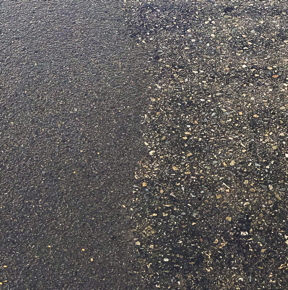
Abstract: Trials of the world�s first experimental section of road pavement with graphene nanotubes have demonstrated a 67% increase in resistance to rutting and cracking. The next step in the industrial application of the technology is designing a road network with a nanotube-reinforced pavement.
Luxembourg | Posted on January 16th, 2020
The Russian company ECO Group has successfully tested road bitumen modified with TUBALL graphene nanotubes produced by OCSiAl. The Ministry of Transport of the Russian Federation had found the formulation to be promising and thus authorized an experimental section of road pavement with nanotubes to be laid on the M-4 Don federal highway.
�Graphene nanotubes form a reinforcing network in asphalt concrete, which improves its physical and mechanical properties: rutting resistance, ring-and-ball softening point, ultimate compressive strength, and fatigue life,� says Alexander Zimnyakov, OCSiAl�s Vice President. �This significantly boosts asphalt concrete�s performance, which is especially important for roads subjected to intense traffic loads at high temperatures.�
Nanotubes are introduced into bitumen using adhesive agents, and the modified bitumen is then added to asphalt concrete. Nanotubes improve the properties of road bitumen even at very low concentrations, from 0.025% to 0.035% in the total weight of bitumen, while the content of bitumen itself in asphalt concrete does not exceed 6%. The tests showed an increase in the softening point by 10�C and a more than twofold increase in the viscosity of the binding agent.
As a result, asphalt concretes containing bitumen with TUBALL nanotubes demonstrate a 67% improvement in rutting resistance and a 67.5% boost in fatigue cracking resistance.
Now, after these successful trials, the next step in the nationwide application of this invention involves designing a road network with a nanotube-reinforced pavement.
�The Expert Council under the Ministry of Transport of the Russian Federation, with the participation of experts from various ministries and departments, recognized the innovative nature of ECO Group�s asphalt concrete modification, approved its application in road construction, and recommended considering its use in road construction,� said ECO Group�s General Director, Alexander Greiz.
Graphene nanotubes (also known as single wall carbon nanotubes) are an incredibly strong and light material that is widely used to change the properties of various materials. Their ability to improve asphalt concrete pavements is being researched by teams of scientists around the world. This solution is one of the first to be green-lighted for testing on real roads.
####
For more information, please click here
Contacts:Anastasia Zirka PR & Advertising Manager+7 913 989 9239
Copyright © OCSiAl Group
If you have a comment, please Contact us.
Issuers of news releases, not 7th Wave, Inc. or Nanotechnology Now, are solely responsible for the accuracy of the content.
Bookmark:


News and information
 Two opposing approaches could give lithium-sulfur batteries a leg up over lithium-ion July 1st, 2022
Efficiently processing high-quality periodic nanostructures with ultrafast laser July 1st, 2022
Photonic synapses with low power consumption and high sensitivity are expected to integrate sensing-memory-preprocessing capabilities July 1st, 2022
Graphene/ Graphite
OCSiAl expands its graphene nanotube production capacities to Europe June 17th, 2022
Bumps could smooth quantum investigations: Rice University models show unique properties of 2D materials stressed by contoured substrates June 10th, 2022
Nanotubes: a promising solution for advanced rubber cables with 60% less conductive filler June 1st, 2022
Dynamic metasurfaces and metadevices empowered by graphene May 6th, 2022
Possible Futures
Sieving carbons: Ideal anodes for high-energy sodium-ion batteries July 1st, 2022
An artificial intelligence probe help see tumor malignancy July 1st, 2022
Photon-controlled diode: an optoelectronic device with a new signal processing behavior July 1st, 2022
Nanotubes/Buckyballs/Fullerenes/Nanorods
Boron nitride nanotube fibers get real: Rice lab creates first heat-tolerant, stable fibers from wet-spinning process June 24th, 2022
Nanotubes: a promising solution for advanced rubber cables with 60% less conductive filler June 1st, 2022
Protective equipment with graphene nanotubes meets the strictest ESD safety standards March 25th, 2022
CEA and Startup C12 Join Forces to Develop Next-Generation Quantum Computers with Multi-Qubit Chips at Wafer Scale March 25th, 2022
Discoveries
Sieving carbons: Ideal anodes for high-energy sodium-ion batteries July 1st, 2022
Efficiently processing high-quality periodic nanostructures with ultrafast laser July 1st, 2022
Photonic synapses with low power consumption and high sensitivity are expected to integrate sensing-memory-preprocessing capabilities July 1st, 2022
Announcements
Two opposing approaches could give lithium-sulfur batteries a leg up over lithium-ion July 1st, 2022
Efficiently processing high-quality periodic nanostructures with ultrafast laser July 1st, 2022
Photonic synapses with low power consumption and high sensitivity are expected to integrate sensing-memory-preprocessing capabilities July 1st, 2022
Construction
A sunlight-driven �self-healing� anti-corrosion coating May 27th, 2022
Polymer fibers with graphene nanotubes make it possible to heat hard-to-reach, complex-shaped items February 11th, 2022
You're so vein: Scientists discover faster way to manufacture vascular materials May 14th, 2021
A quantum material-based diagnostic paint to sense problems before structural failure October 23rd, 2020
