
| Date | 7th, Mar 2020 |
|---|
Home > Press > Curcumin is the spice of life when delivered via tiny nanoparticles: Treatment for Alzheimer's and genital herpes
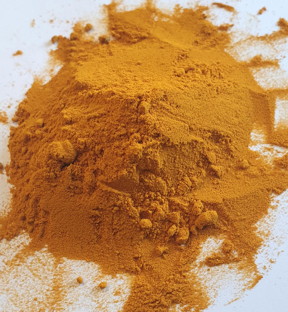 Turmeric (pictured) contains the active compound curcumin, which can now be more easily absorbed by the body thanks to nanotechnology.
CREDIT
University of South Australia
Turmeric (pictured) contains the active compound curcumin, which can now be more easily absorbed by the body thanks to nanotechnology.
CREDIT
University of South Australia
Abstract: For years, curry lovers have sworn by the anti-inflammatory properties of turmeric, but its active compound, curcumin, has long frustrated scientists hoping to validate these claims with clinical studies.
Adelaide, Australia | Posted on March 6th, 2020
The failure of the body to easily absorb curcumin has been a thorn in the side of medical researchers seeking scientific proof that curcumin can successfully treat cancer, heart disease, Alzheimer's and many other chronic health conditions.
Now, researchers from the University of South Australia (UniSA), McMaster University in Canada and Texas A&M University have shown that curcumin can be delivered effectively into human cells via tiny nanoparticles.
Sanjay Garg, a professor of pharmaceutical science at UniSA, and his colleague Dr Ankit Parikh are part of an international team that has developed a nano formulation which changes curcumin's behaviour to increase its oral bioavailability by 117 per cent.
The researchers have shown in animal experiments that nanoparticles containing curcumin not only prevents cognitive deterioration but also reverses the damage. This finding paves the way for clinical development trials for Alzheimer's.
Co-author Professor Xin-Fu Zhou, a UniSA neuroscientist, says the new formulation offers a potential solution for Alzheimer's disease.
"Curcumin is a compound that suppresses oxidative stress and inflammation, both key pathological factors for Alzheimer's, and it also helps remove amyloid plaques, small fragments of protein that clump together in the brains of Alzheimer disease patients," Prof Zhou says.
The same delivery method is now being tested to show that curcumin can also prevent the spread of genital herpes.
"To treat genital herpes (HSV-2) you need a form of curcumin that is better absorbed, which is why it needs to be encapsulated in a nano formulation," Prof Garg says.
"Curcumin can stop the genital herpes virus, it helps in reducing the inflammation and makes it less susceptible to HIV and other STIs," Prof Garg says.
Women are biologically more vulnerable to genital herpes as bacterial and viral infections in the female genital tract (FGT) impair the mucosal barrier. Curcumin, however, can minimize genital inflammation and control against HSV-2 infection, which would assist in the prevention of HIV infection in the FGT.
###
Their findings have been published in the International Journal of Molecular Sciences and Drug Delivery and Translational Research as part I and part II. All these papers are available by contacting
####
For more information, please click here
Contacts:Candy Gibson
61-883-020-961
Copyright © University of South Australia
If you have a comment, please Contact us.
Issuers of news releases, not 7th Wave, Inc. or Nanotechnology Now, are solely responsible for the accuracy of the content.
Bookmark:


News and information
 Two opposing approaches could give lithium-sulfur batteries a leg up over lithium-ion July 1st, 2022
Efficiently processing high-quality periodic nanostructures with ultrafast laser July 1st, 2022
Photonic synapses with low power consumption and high sensitivity are expected to integrate sensing-memory-preprocessing capabilities July 1st, 2022
Possible Futures
Sieving carbons: Ideal anodes for high-energy sodium-ion batteries July 1st, 2022
An artificial intelligence probe help see tumor malignancy July 1st, 2022
Photon-controlled diode: an optoelectronic device with a new signal processing behavior July 1st, 2022
Nanomedicine
An artificial intelligence probe help see tumor malignancy July 1st, 2022
New technology helps reveal inner workings of human genome June 24th, 2022
Discoveries
Sieving carbons: Ideal anodes for high-energy sodium-ion batteries July 1st, 2022
Efficiently processing high-quality periodic nanostructures with ultrafast laser July 1st, 2022
Photonic synapses with low power consumption and high sensitivity are expected to integrate sensing-memory-preprocessing capabilities July 1st, 2022
Announcements
Two opposing approaches could give lithium-sulfur batteries a leg up over lithium-ion July 1st, 2022
Efficiently processing high-quality periodic nanostructures with ultrafast laser July 1st, 2022
Photonic synapses with low power consumption and high sensitivity are expected to integrate sensing-memory-preprocessing capabilities July 1st, 2022
Interviews/Book Reviews/Essays/Reports/Podcasts/Journals/White papers/Posters
Sieving carbons: Ideal anodes for high-energy sodium-ion batteries July 1st, 2022
An artificial intelligence probe help see tumor malignancy July 1st, 2022
Photon-controlled diode: an optoelectronic device with a new signal processing behavior July 1st, 2022
Nanobiotechnology
New technology helps reveal inner workings of human genome June 24th, 2022
