
Mar 30, 2020
(Nanowerk Spotlight) As we pointed out in our previous Nanowerk Spotlight ("Freeze-thaw made noble metal aerogels: Clean and hierarchical materials for photoelectrocatalysis"), noble metal aerogels are widely investigated in particular for electrocatalysis applications due to the combination of their large specific surface areas and the high catalytic activity of noble metals.
"One of the key issues that is holding back widespread applications of these noble metal aerogels is a lack of understanding of the underlying structure-performance correlations," Dr. Ran Du, a Research Fellow in the Eychmüller Group at Technical University Dresden, tells Nanowerk. "Presumably, this is caused by an insufficient understanding of the sol-gel process that limits manipulating versatile parameters, such as ligament sizes, compositions, and spatial element distributions."
Since noble metal aerogels (NMAs) debuted in 2009, the development of the reductant-directed fabrication method can be considered a milestone. Previously, researchers prepared noble metal hydrogels in two steps by first synthesizing metal nanoparticles with metal salts and reductants, and then using gelation initiators to assemble these nanoparticles into gel networks.
In 2013, scientists found that a particular reductant – sodium borohydride (NaBH4) – can directly transform metal salts into a gel, thus combining the previously necessary two steps into one and yielding clean NMAs without introducing extra initiators.
This strategy has since been widely adopted and became one of the most popular synthesis methods in the field of NMAs.
"However, two crucial issues remain unsolved," Du points out: "First, the fabrication time at room temperature with a classical metal precursor concentration (∼0.2 mM) is extremely long; and second, the underlying mechanism has never been fully explained. Hence, the method is limited to certain metal systems and does not meet the requirements for practical production."
An international team of researchers from TU Dresden, Purdue University, and Wenzhou University joined together to address the above issues. They reported their findings in Nature Communications ("Unveiling reductant chemistry in fabricating noble metal aerogels for superior oxygen evolution and ethanol oxidation").
By unveiling multiple roles of reductants (i.e., as reducing agents, stabilizers, and initiators) as well as the underlying gelation mechanism via combined experimental and theoretical approaches, the researchers developed an excessive-NaBH4-directed gelation strategy. "Excessive" means that in contrast to previous reports, where the NaBH4-to-metal-salt ratio (R/M) was set to 1.5–5, the team for this work adopted a R/M ratio of 100.
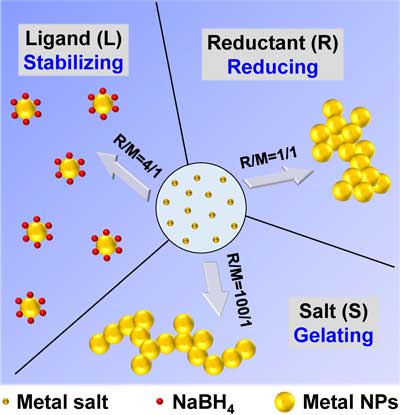 Figure 1. Multiple roles of reductants. (Reprinted with permission by Nature Publication Group)
One of the results was that the gel formed within 4–6 hours at room temperature, substantially faster than that of previous NaBH4-triggered gelation systems that took several weeks at this temperature.
Taking advantage of the unprecedented destabilization capacity of this method, the team acquired gold aerogels with a record-high specific surface area (59.8 square meters per gram) by activating the ligand chemistry, and expanding the composition space to all 8 noble metals – gold (Au), silver (Ag), palladium (Pd), platinum (Pt), ruthenium (Ru), rhodium (Rh), iridium (Ir), and osmium (Os) – thus discovering new phenomena (i.e., spontaneous combustion) and obtaining various high-performance electrocatalysts for the ethanol oxidation reaction (EOR) and oxygen evolution reaction (OER).
The team's in-depth study identified the possible roles played by NaBH4 and the underlying mechanisms of the reductant-directed gelation process.
First, broad electrolyte-type reductants, which can dissociate in water and release ions, were shown to directly destabilize metal salts to form the corresponding gels. Three roles of reductants appear in sequence with increasing reductant-to-metal ratio (R/M): the reducing agent, the ligand, and the salting-out agent.
At a low R/M (
Figure 1. Multiple roles of reductants. (Reprinted with permission by Nature Publication Group)
One of the results was that the gel formed within 4–6 hours at room temperature, substantially faster than that of previous NaBH4-triggered gelation systems that took several weeks at this temperature.
Taking advantage of the unprecedented destabilization capacity of this method, the team acquired gold aerogels with a record-high specific surface area (59.8 square meters per gram) by activating the ligand chemistry, and expanding the composition space to all 8 noble metals – gold (Au), silver (Ag), palladium (Pd), platinum (Pt), ruthenium (Ru), rhodium (Rh), iridium (Ir), and osmium (Os) – thus discovering new phenomena (i.e., spontaneous combustion) and obtaining various high-performance electrocatalysts for the ethanol oxidation reaction (EOR) and oxygen evolution reaction (OER).
The team's in-depth study identified the possible roles played by NaBH4 and the underlying mechanisms of the reductant-directed gelation process.
First, broad electrolyte-type reductants, which can dissociate in water and release ions, were shown to directly destabilize metal salts to form the corresponding gels. Three roles of reductants appear in sequence with increasing reductant-to-metal ratio (R/M): the reducing agent, the ligand, and the salting-out agent.
At a low R/M (
Figure 1. Multiple roles of reductants. (Reprinted with permission by Nature Publication Group)
One of the results was that the gel formed within 4–6 hours at room temperature, substantially faster than that of previous NaBH4-triggered gelation systems that took several weeks at this temperature.
Taking advantage of the unprecedented destabilization capacity of this method, the team acquired gold aerogels with a record-high specific surface area (59.8 square meters per gram) by activating the ligand chemistry, and expanding the composition space to all 8 noble metals – gold (Au), silver (Ag), palladium (Pd), platinum (Pt), ruthenium (Ru), rhodium (Rh), iridium (Ir), and osmium (Os) – thus discovering new phenomena (i.e., spontaneous combustion) and obtaining various high-performance electrocatalysts for the ethanol oxidation reaction (EOR) and oxygen evolution reaction (OER).
The team's in-depth study identified the possible roles played by NaBH4 and the underlying mechanisms of the reductant-directed gelation process.
First, broad electrolyte-type reductants, which can dissociate in water and release ions, were shown to directly destabilize metal salts to form the corresponding gels. Three roles of reductants appear in sequence with increasing reductant-to-metal ratio (R/M): the reducing agent, the ligand, and the salting-out agent.
At a low R/M (