
| Date | 15th, May 2020 |
|---|
Home > Press > Oil & gas and automotive sectors will benefit from durable polymers with graphene nanotubes
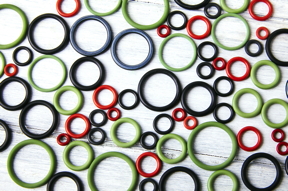
Abstract: Oil & gas, automotive, chemical processing and other industries that deal with the harshest heat and chemical conditions are now able to utilize high-performance fluoroelastomers with graphene nanotubes that guarantee continuous production operations with less frequent shut-downs for maintenance. A new nanotube solution has entered the market, paving the way for reducing filler content and improving polymer stability in aggressive atmospheres.
Luxembourg | Posted on May 14th, 2020
Small, but critical, components such as seals, O-rings, gaskets, and hoses are exposed to the harshest environments in oil & gas operations or as parts of vehicle engines. Fluoroelastomers are often the top choice for these tiny rubber parts due to the requirement to resist synthetic oils, corrosive fumes, chemicals, ultra-high temperatures and pressure. Depending on the final application requirements, conductive compounds based on carbon black or reinforced formulations based on silica are two types of widely used FKM formulations for the most vital sectors.
New technology has been developed to further improve both of these FKM formulas, which can help to reduce material consumption and save maintenance costs. A solution based on TUBALL graphene nanotubes, produced by OCSiAl, allows manufacturers to enhance all mechanical properties including prolonged durability, and also provides electrical conductivity to FKM.
In carbon black-based FKM formulation, it has been proven that introducing as low as 3% of graphene nanotube concentrate can neutralize carbon black�s negative impacts on flexibility and elasticity, which otherwise result in hardening and a reduced life cycle for the final products. Nanotubes make it possible to achieve electrical resistivity of 5 Ohm*cm, and at the same time to improve tensile and tear parameters by 30�40% without a reduction in elasticity, according to data after heat and fuel C aging.
In silica-based FKM, the addition of graphene nanotubes results in increased resistance to synthetic fuels and heat, improved tensile strength and M100 (or modulus 100) by up to 30%, increased abrasion resistance by up to 20% and enhanced tear strength by up to 90%. Moreover, tests have proven that these improvements to mechanical properties are maintained throughout extensive heating. Additionally, graphene nanotube-enhanced, silica-based FKMs offer electrical conductivity below 10 Ohm*cm.
These advancements of high value not only in oil & gas and auto industry, but also in some specific applications, such as in production areas with automated systems and sensors where color and electrostatics are required for identification of parts by robots.
The unique properties offered by graphene nanotubes give more freedom to FKM compounders to upgrade rubber formulations by reducing filler content and improving polymer stability in austere environments, which results in economic benefits to a number of key industries.
####
For more information, please click here
Contacts:Anastasia Zirka PR & Advertising Manager+7 913 989 9239
Copyright © OCSiAl Group
If you have a comment, please Contact us.
Issuers of news releases, not 7th Wave, Inc. or Nanotechnology Now, are solely responsible for the accuracy of the content.
Bookmark:


News and information
 New technology helps reveal inner workings of human genome June 24th, 2022
Boron nitride nanotube fibers get real: Rice lab creates first heat-tolerant, stable fibers from wet-spinning process June 24th, 2022
Graphene/ Graphite
OCSiAl expands its graphene nanotube production capacities to Europe June 17th, 2022
Bumps could smooth quantum investigations: Rice University models show unique properties of 2D materials stressed by contoured substrates June 10th, 2022
Nanotubes: a promising solution for advanced rubber cables with 60% less conductive filler June 1st, 2022
Dynamic metasurfaces and metadevices empowered by graphene May 6th, 2022
Possible Futures
New technology helps reveal inner workings of human genome June 24th, 2022
Boron nitride nanotube fibers get real: Rice lab creates first heat-tolerant, stable fibers from wet-spinning process June 24th, 2022
Nanotubes/Buckyballs/Fullerenes/Nanorods
Boron nitride nanotube fibers get real: Rice lab creates first heat-tolerant, stable fibers from wet-spinning process June 24th, 2022
Nanotubes: a promising solution for advanced rubber cables with 60% less conductive filler June 1st, 2022
Protective equipment with graphene nanotubes meets the strictest ESD safety standards March 25th, 2022
CEA and Startup C12 Join Forces to Develop Next-Generation Quantum Computers with Multi-Qubit Chips at Wafer Scale March 25th, 2022
Materials/Metamaterials
Nanotubes: a promising solution for advanced rubber cables with 60% less conductive filler June 1st, 2022
New route to build materials out of tiny particles May 27th, 2022
A one-stop shop for quantum sensing materials May 27th, 2022
Announcements
New technology helps reveal inner workings of human genome June 24th, 2022
Boron nitride nanotube fibers get real: Rice lab creates first heat-tolerant, stable fibers from wet-spinning process June 24th, 2022
Energy
Solving the solar energy storage problem with rechargeable batteries that can convert and store energy at once June 24th, 2022
Organic water splitters get a boost June 10th, 2022
Engineering piezoelectricity and strain sensitivity in CdS to promote piezocatalytic hydrogen evolution May 13th, 2022
Automotive/Transportation
OCSiAl expands its graphene nanotube production capacities to Europe June 17th, 2022
A sunlight-driven �self-healing� anti-corrosion coating May 27th, 2022
Scavenger nanoparticles could make fuel cell-powered vehicles a reality April 1st, 2022
Graphene gets enhanced by flashing: Rice process customizes one-, two- or three-element doping for applications March 31st, 2022
