
| Date | 3rd, Jul 2020 |
|---|
Home > Press > Charcoal a weapon to fight superoxide-induced disease, injury: Nanomaterials soak up radicals, could aid treatment of COVID-19
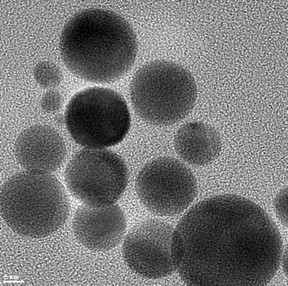 Artificial enzymes made of treated charcoal, seen in this atomic force microscope image, could have the power to curtail damaging levels of superoxides, toxic radical oxygen ions that appear at high concentrations after an injury. (Credit: Tour Group/Rice University)
Abstract: Artificial enzymes made of treated charcoal could have the power to curtail damaging levels of superoxides, radical oxygen ions that are toxic at high concentrations.
Houston, TX | Posted on July 2nd, 2020
The nanozymes developed by a Texas Medical Center team are highly effective antioxidants that break down damaging reactive oxygen species (ROS) produced in abundance in response to an injury or stroke.
The researchers suggested the materials, described in the American Chemical Society journal ACS Applied Nano Materials, could aid treatment of COVID-19 patients.
The biocompatible, highly soluble charcoal is a superoxide dismutase, and was synthesized and tested by scientists at Rice University, the University of Texas Health Science Center�s McGovern Medical School and the Texas A&M Health Science Center.
Superoxide dismutases, or SODs, dismantle ROS into ordinary molecular oxygen and hydrogen peroxide. In the project co-led by Rice chemist James Tour, previous materials were successfully tested for their ability to activate the process, including graphene quantum dots drawn from coal and polyethylene glycol-hydrophilic carbon clusters made from carbon nanotubes.
They have now found oxidized charcoal nanoparticles are not only effective antioxidants but can also be made from an activated carbon source that is inexpensive, good manufacturing practice (GMP)-certified and already being used in humans to treat acute poisoning.
�That these nanozymes are made from a GMP source opens the door for drug manufacturers,� said Tour, who led the project with A&M neurologist Thomas Kent and UTHealth biochemist Ah-Lim Tsai. �While coal was effective, an issue is that it can have a variety of toxic metallic elements and impurities that are not consistent across samples. And the clusters made from carbon nanotubes are very expensive.�
The disclike nanozymes are prepared from powdered, medical-grade charcoal oxidized by treatment with highly concentrated nitric acid. The nanozymes teem with oxygen-containing functional groups that bust up superoxides in solution.
Tour noted the nanozymes are able to pass through the membranes of cells� mitochondria to quench a major source of free radicals without killing the cells themselves. �We published a paper on this recently,� he said. �This seems to be really important to why these work so well in traumatic brain injury and stroke.�
The researchers noted it may be worthwhile to study the application of their nanozymes to treat the cytokine storms -- an excessive immune system response to infection -- suspected of contributing to tissue and organ damage in COVID-19 patients.
�While speculative that these particles will be helpful in COVID-19, if administration is timed correctly, they could reduce the damaging radicals that accompany the cytokine storm and could be further chemically modified to reduce other injury-causing features of this disease,� Kent said.
Gang Wu, an assistant professor of hematology at McGovern, and Rice graduate student Emily McHugh are co-lead authors of the study. Co-authors are Vladimir Berka, a senior research scientist at McGovern; Rice graduate students Weiyin Chen, Zhe Wang and Jacob Beckham; Rice undergraduate Trenton Roy; and Paul Derry, an assistant professor at Texas A&M�s Institute of Biosciences and Technology.
Tour is the T.T. and W.F. Chao Chair in Chemistry as well as a professor of computer science and of materials science and nanoengineering at Rice. Kent is the Robert A. Welch Chair Professor in the Institute of Biosciences and Technology at Texas A&M-Houston Campus and an adjunct chemistry professor at Rice and at Houston Methodist Hospital. Tsai is a professor of hematology at UTHealth.
The National Institutes of Health and the Welch Foundation supported the research.
####
About Rice UniversityLocated on a 300-acre forested campus in Houston, Rice University is consistently ranked among the nation�s top 20 universities by U.S. News & World Report. Rice has highly respected schools of Architecture, Business, Continuing Studies, Engineering, Humanities, Music, Natural Sciences and Social Sciences and is home to the Baker Institute for Public Policy. With 3,962 undergraduates and 3,027 graduate students, Rice�s undergraduate student-to-faculty ratio is just under 6-to-1. Its residential college system builds close-knit communities and lifelong friendships, just one reason why Rice is ranked No. 1 for lots of race/class interaction and No. 4 for quality of life by the Princeton Review. Rice is also rated as a best value among private universities by Kiplinger�s Personal Finance.
Follow Rice News and Media Relations via Twitter @RiceUNews.
For more information, please click here
Contacts:Jeff Falk713-348-6775
Mike Williams713-348-6728
Copyright © Rice University
If you have a comment, please Contact us.
Issuers of news releases, not 7th Wave, Inc. or Nanotechnology Now, are solely responsible for the accuracy of the content.
Bookmark:


 Coal could yield treatment for traumatic injuries:
Nano-antioxidants prove their potential:
News and information
New technology helps reveal inner workings of human genome June 24th, 2022
Boron nitride nanotube fibers get real: Rice lab creates first heat-tolerant, stable fibers from wet-spinning process June 24th, 2022
Graphene/ Graphite
OCSiAl expands its graphene nanotube production capacities to Europe June 17th, 2022
Bumps could smooth quantum investigations: Rice University models show unique properties of 2D materials stressed by contoured substrates June 10th, 2022
Nanotubes: a promising solution for advanced rubber cables with 60% less conductive filler June 1st, 2022
Dynamic metasurfaces and metadevices empowered by graphene May 6th, 2022
Govt.-Legislation/Regulation/Funding/Policy
Solving the solar energy storage problem with rechargeable batteries that can convert and store energy at once June 24th, 2022
Boron nitride nanotube fibers get real: Rice lab creates first heat-tolerant, stable fibers from wet-spinning process June 24th, 2022
UBCO researchers change the game when it comes to activity tracking: Flexible, highly sensitive motion device created by extrusion printing June 17th, 2022
University of Illinois Chicago joins Brookhaven Lab's Quantum Center June 10th, 2022
Possible Futures
New technology helps reveal inner workings of human genome June 24th, 2022
Boron nitride nanotube fibers get real: Rice lab creates first heat-tolerant, stable fibers from wet-spinning process June 24th, 2022
Nanomedicine
New technology helps reveal inner workings of human genome June 24th, 2022
New nano-gel to protect children receiving chemotherapy from hearing loss June 17th, 2022
Discoveries
New technology helps reveal inner workings of human genome June 24th, 2022
Boron nitride nanotube fibers get real: Rice lab creates first heat-tolerant, stable fibers from wet-spinning process June 24th, 2022
Announcements
New technology helps reveal inner workings of human genome June 24th, 2022
Boron nitride nanotube fibers get real: Rice lab creates first heat-tolerant, stable fibers from wet-spinning process June 24th, 2022
Interviews/Book Reviews/Essays/Reports/Podcasts/Journals/White papers/Posters
Quantum network nodes with warm atoms June 24th, 2022
New technology helps reveal inner workings of human genome June 24th, 2022
Grants/Sponsored Research/Awards/Scholarships/Gifts/Contests/Honors/Records
Solving the solar energy storage problem with rechargeable batteries that can convert and store energy at once June 24th, 2022
Boron nitride nanotube fibers get real: Rice lab creates first heat-tolerant, stable fibers from wet-spinning process June 24th, 2022
Quantum Dots/Rods
New substance classes for nanomaterials: Nano spheres and diamond slivers made of silicon and germanium: Potential applications as nano semiconductor materials September 10th, 2021
�Missing jigsaw piece�: engineers make critical advance in quantum computer design August 20th, 2021
Nanobiotechnology
New technology helps reveal inner workings of human genome June 24th, 2022
New nano-gel to protect children receiving chemotherapy from hearing loss June 17th, 2022
