
| Date | 21st, Sep 2020 |
|---|
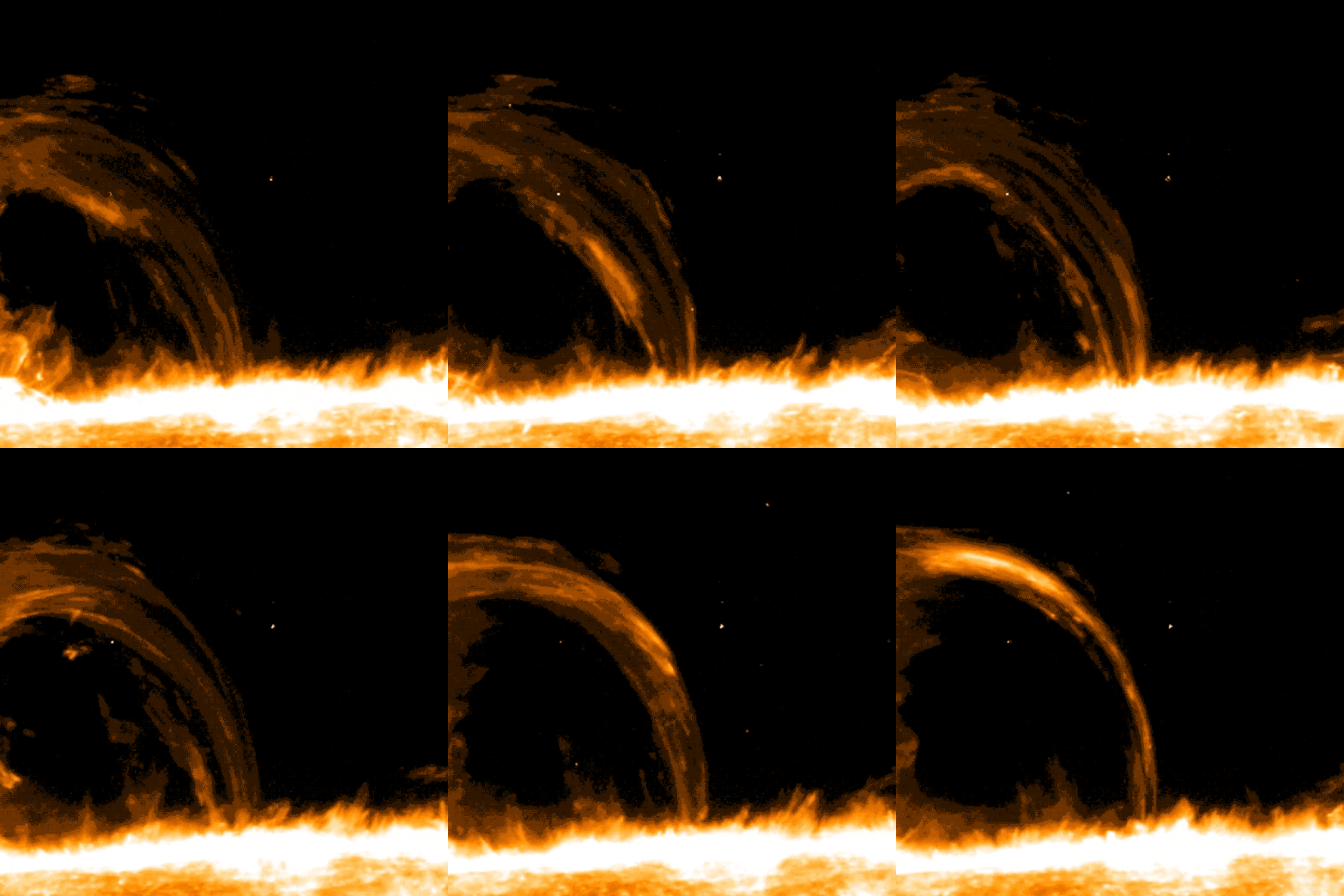
These images showing nanojets on the Sun were captured by NASA’s IRIS mission on Apr. 3, 2014. Credit: NASA’s Goddard Space Flight Center
In a paper published today (September 21, 2020) in Nature Astronomy, researchers report the first ever clear images of nanojets — bright thin lights that travel perpendicular to the magnetic structures in the solar atmosphere, called the corona — in a process that reveals the existence of one of the potential coronal heating candidates: nanoflares.
In pursuit of understanding why the Sun’s atmosphere is so much hotter than the surface, and to help differentiate between a host of theories about what causes this heating, researchers turn to NASA’s Interface Region Imaging Spectrograph (IRIS) mission. IRIS was finely tuned with a high-resolution imager to zoom in on specific hard-to-see events on the Sun.
