
Laser coherence refers to the number of photons emitted consecutively into a beam with the same phase, and determines how well it can perform a variety of precision tasks, such as controlling components of a quantum computer.
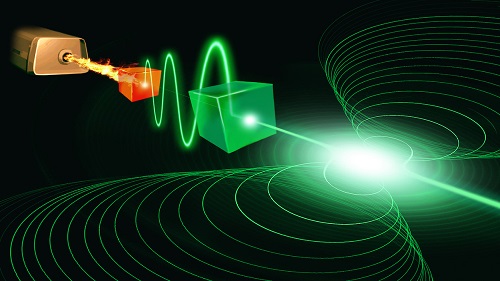
Howard Wiseman, director of the Centre for Quantum Dynamics at Griffith University, said evolving understanding of how energy is added to the laser and how it is released to form the beam contributed to the revelation. Sixty years ago, he said, and in the case of many lasers today, certain assumptions made in the 1958 paper are true.
“In our paper, we have shown that the true limit imposed by quantum mechanics is that the coherence cannot be greater than the fourth power of the number of photons stored in the laser,” said Dominic Berry of Macquarie University.
The researchers used a numerical simulation to find a quantum mechanical model for a laser that is able to achieve the theoretical upper bound for coherence in a beam that is otherwise indistinguishable from that of a conventional laser.
The research was published in Nature Physics (www.doi.org/10.1038/s41567-020-01049-3).
