
| Date | 2nd, Nov 2020 |
|---|
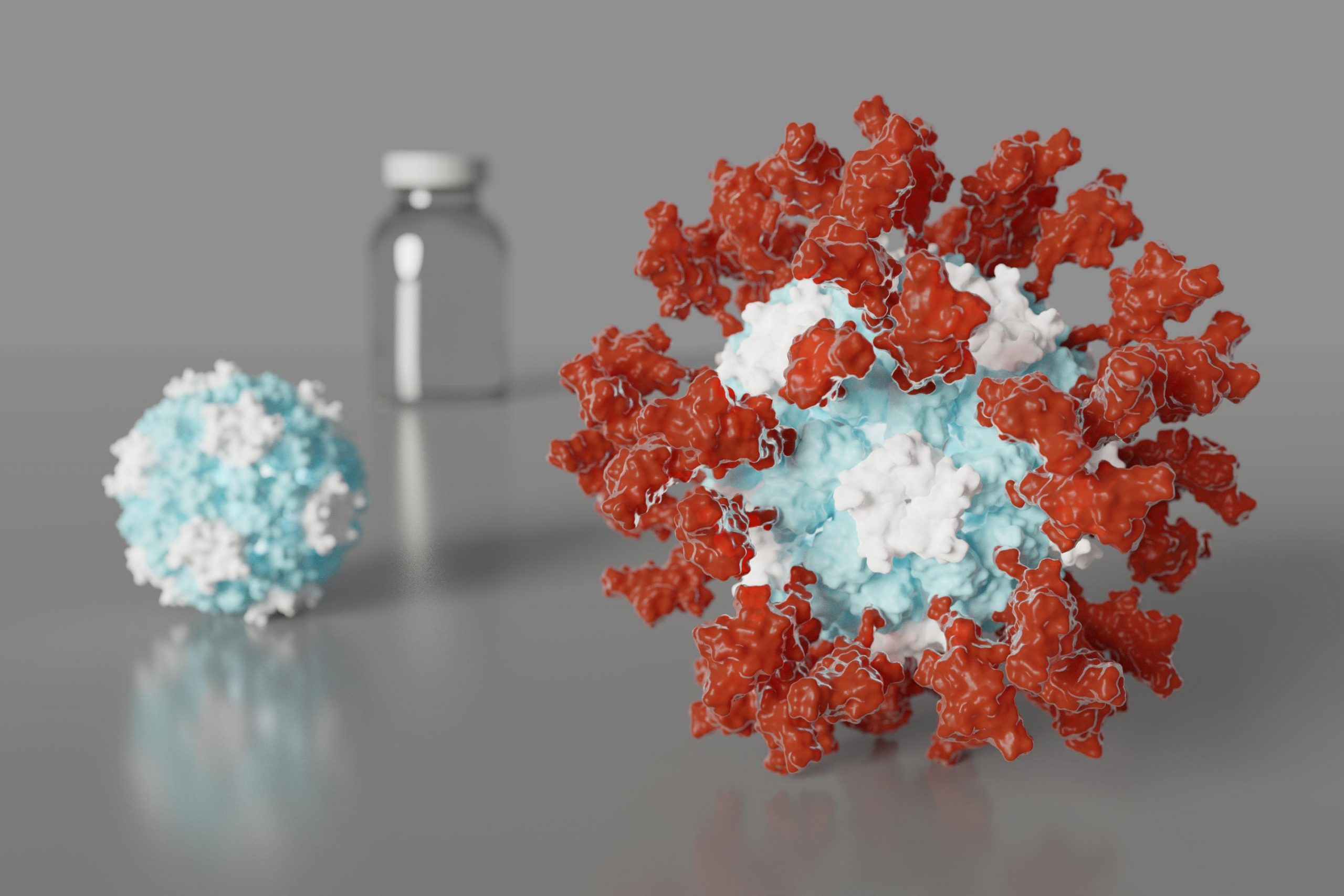
Artist’s depiction of an ultrapotent COVID-19 vaccine candidate in which 60 pieces of a coronavirus protein (red) decorate nanoparticles (blue and white). The vaccine candidate was designed using methods developed at the UW Medicine Institute for Protein Design. The molecular structure of the vaccine roughly mimics that of a virus, which may account for its enhanced ability to provoke an immune response. Credit: Ian Haydon/ UW Medicine Institute for Protein Design
Preclinical data published in Cell show the nanoparticle vaccine spurs extremely high levels of protective antibodies in animal models.
An innovative nanoparticle vaccine candidate for the pandemic coronavirus produces virus-neutralizing antibodies in mice at levels 10 times greater than is seen in people who have recovered from COVID-19 infections. Designed by scientists at the University of Washington School of Medicine in Seattle, the vaccine candidate has been transferred to two companies for clinical development.
Compared to vaccination with the soluble SARS-CoV-2 Spike protein, on which many leading COVID-19 vaccine candidates are based, the new nanoparticle vaccine produced 10 times more neutralizing antibodies in mice, even at a sixfold lower dose. The data also show a strong B-cell response after immunization, which can be critical for immune memory and a durable vaccine effect. When administered to a single nonhuman primate, the nanoparticle vaccine produced neutralizing antibodies targeting multiple different sites on the Spike protein. Researchers say this may ensure protection against mutated strains of the virus, should they arise. The Spike protein is part of the coronavirus infectivity machinery.
The findings were published on October 30, 2020, in Cell. The lead authors of this paper are Alexandra Walls, a research scientist in the laboratory of David Veesler, a UW associate professor of biochemistry; and Brooke Fiala, a research scientist in the lab of Neil King, UW assistant professor of biochemistry.
