
| Date | 9th, Mar 2021 |
|---|
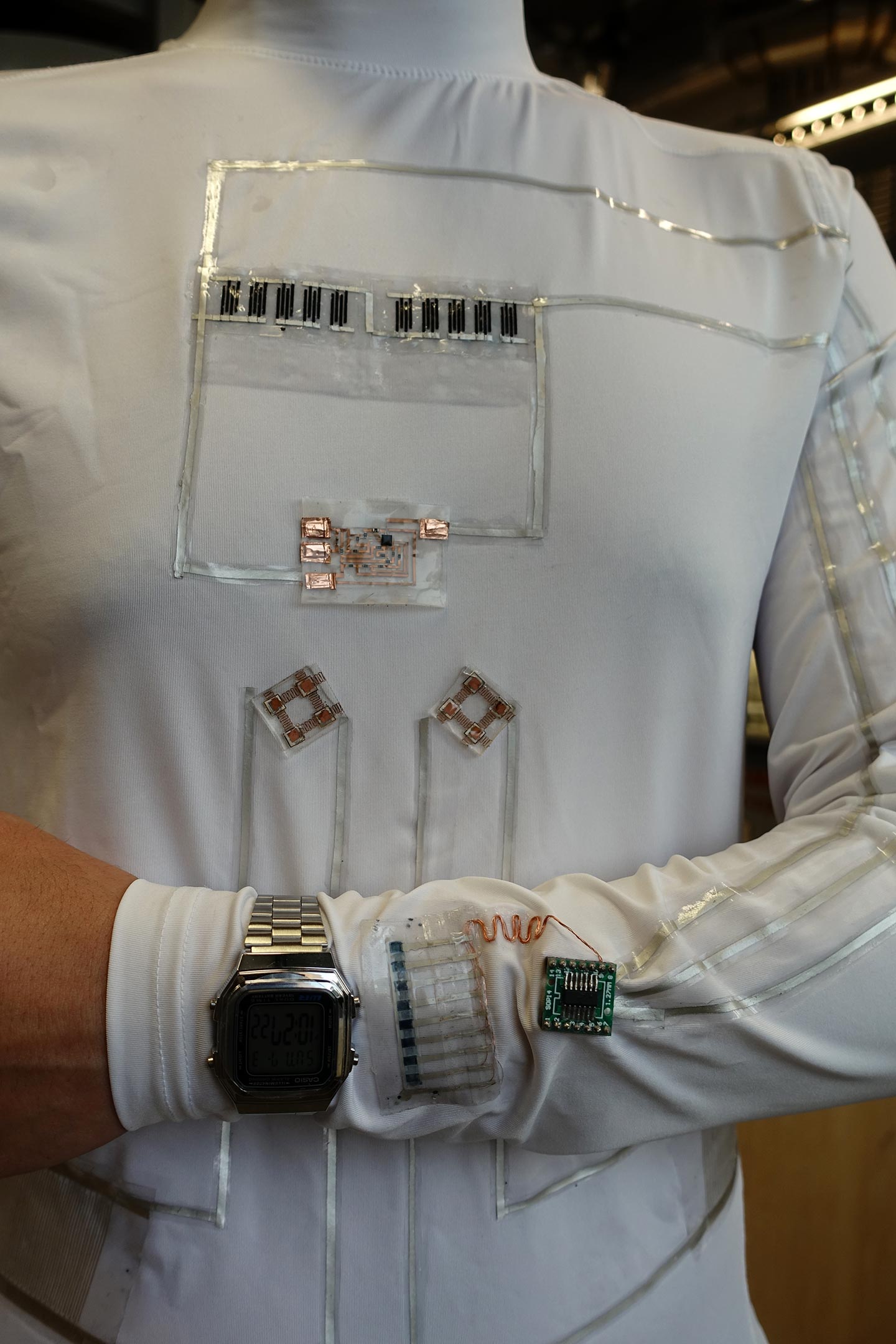
The wearable microgrid uses energy from human sweat and movement to power an LCD wristwatch and electrochromic device. Credit: Lu Yin
Nanoengineers at the University of California San Diego have developed a “wearable microgrid” that harvests and stores energy from the human body to power small electronics. It consists of three main parts: sweat-powered biofuel cells, motion-powered devices called triboelectric generators, and energy-storing supercapacitors. All parts are flexible, washable and can be screen printed onto clothing.
The technology, reported in a paper published today (March 9, 2021) in Nature Communications, draws inspiration from community microgrids.
“We’re applying the concept of the microgrid to create wearable systems that are powered sustainably, reliably and independently,” said co-first author Lu Yin, a nanoengineering Ph.D. student at the UC San Diego Jacobs School of Engineering. “Just like a city microgrid integrates a variety of local, renewable power sources like wind and solar, a wearable microgrid integrates devices that locally harvest energy from different parts of the body, like sweat and movement, while containing energy storage.”
