
| Date | 19th, Mar 2021 |
|---|
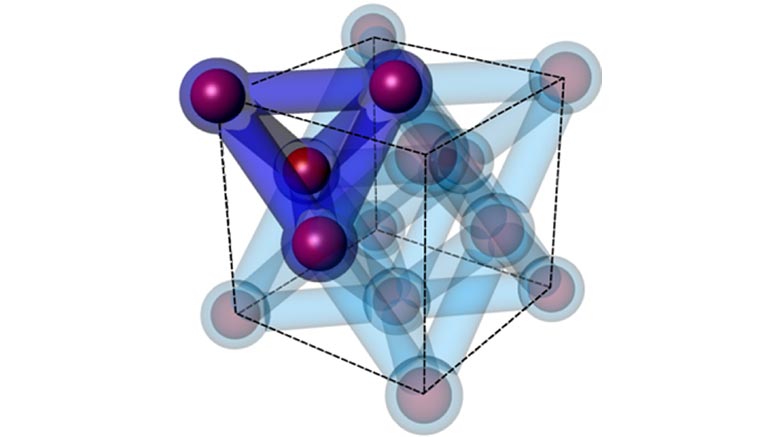
Mineralization of 3D lattice formed by DNA tetrahedra (about 30 nm) and gold nanoparticle into all-inorganic 3D silica-Au replicas with preserved architecture. Credit: Oleg Gang/Columbia Engineering
Columbia Engineers use DNA nanotechnology to create highly resilient synthetic nanoparticle-based materials that can be processed through conventional nanofabrication methods.
Columbia Engineering researchers, working with Brookhaven National Laboratory, report today that they have built designed nanoparticle-based 3D materials that can withstand a vacuum, high temperatures, high pressure, and high radiation. This new fabrication process results in robust and fully engineered nanoscale frameworks that not only can accommodate a variety of functional nanoparticle types but also can be quickly processed with conventional nanofabrication methods.
“These self-assembled nanoparticles-based materials are so resilient that they could fly in space,” says Oleg Gang, professor of chemical engineering and of applied physics and materials science, who led the study published today (March 19, 201) by Science Advances. “We were able to transition 3D DNA-nanoparticle architectures from liquid state — and from being a pliable material — to solid state, where silica re-enforces DNA struts. This new material fully maintains its original framework architecture of DNA-nanoparticle lattice, essentially creating a 3D inorganic replica. This allowed us to explore — for the first time — how these nanomaterials can battle harsh conditions, how they form, and what their properties are.”
