
| Date | 20th, Apr 2021 |
|---|
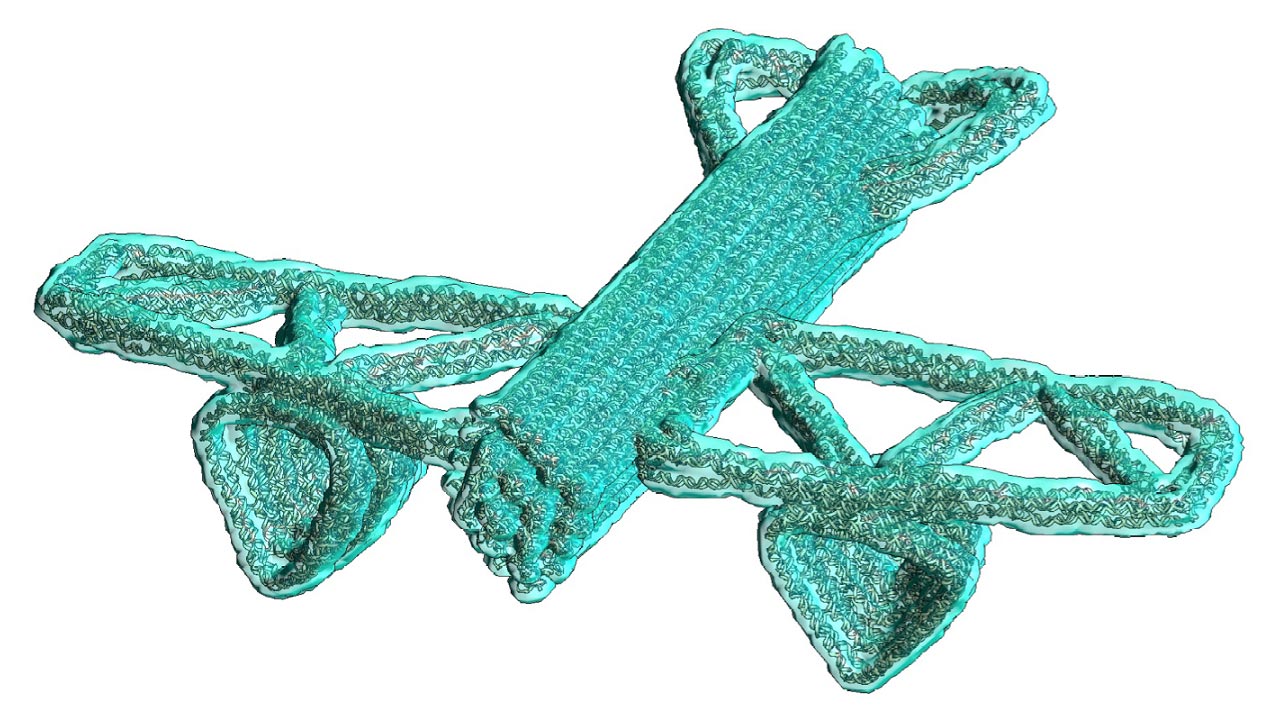
This “airplane,” made of strands of DNA, is 1000 times smaller than the width of a human hair. Credit: Ohio State University
Someday, scientists believe, tiny DNA-based robots and other nanodevices will deliver medicine inside our bodies, detect the presence of deadly pathogens, and help manufacture increasingly smaller electronics.
Researchers took a big step toward that future by developing a new tool that can design much more complex DNA robots and nanodevices than were ever possible before in a fraction of the time.
In a paper published on April 19, 2021, in the journal Nature Materials, researchers from The Ohio State University – led by former engineering doctoral student Chao-Min Huang – unveiled new software they call MagicDNA.
The software helps researchers design ways to take tiny strands of DNA and combine them into complex structures with parts like rotors and hinges that can move and complete a variety of tasks, including drug delivery.
