
The new approach bypasses the need for extreme refrigeration to provide high-quality light at room temperature.
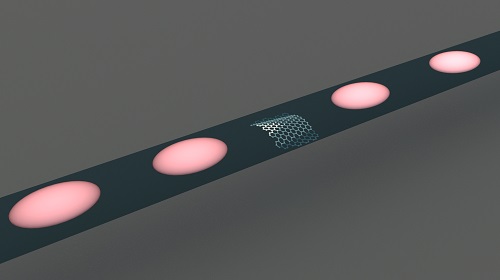
In the work, the researchers coupled hexagonal boron nitride (hBN) single-photon emitters to silicon nitride (SiN) waveguides and, from there, developed a way to image the quantum emitters. They activated the emitters on thermal silicon dioxide (SiO2), then encapsulated the emitters in a protective SiO2 layer before depositing the SiN photonic-guiding layer. Throughout the encapsulation and nanofabrication steps, the integrated emitter maintained high single-photon purity and high-quality quantum light.
Ali Elshaari, an associate professor at KTH and author on a study describing the research, said quantum circuits with light are either operated at cryogenic temperatures (4 K) using atom-like single-photon sources, or at room temperature using random single-photon sources.
In contrast, the technique developed by the KTH team enables photonic circuits with on-demand emission of light particles at room temperature.
“In existing optical circuits operating at room temperature, you never know when the single photon is generated unless you do a heralding measurement,” Elshaari said. “We realized a deterministic process that precisely positions light-particles emitters operating at room temperature in an integrated photonic circuit.”
“The photonic approach offers a natural link between communication and computation,” Zwiller said. “That’s important, since the end goal is to transmit the processed quantum information using light.”
The research was published in Advanced Quantum Technologies (www.doi.org/10.1002/qute.202100032).
