
| Date | 29th, May 2021 |
|---|
Home > Press > Researchers build structured, multi-part nanocrystals with super light-emitting properties
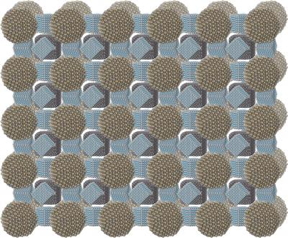 Researchers combined perovskite nanocubes - tiny crystals with useful electrical or optical properties - with spherical nanoparticles to form a regular, repeating structure called a superlattice. Some of these structures displayed superfluorescence, "a burst of photons."
CREDIT
Image courtesy of Maksym Kovalenko and Ihor Cherniukh/ETH Z�rich, the Swiss Federal Institute of Technology
Researchers combined perovskite nanocubes - tiny crystals with useful electrical or optical properties - with spherical nanoparticles to form a regular, repeating structure called a superlattice. Some of these structures displayed superfluorescence, "a burst of photons."
CREDIT
Image courtesy of Maksym Kovalenko and Ihor Cherniukh/ETH Z�rich, the Swiss Federal Institute of Technology
Abstract: Researchers have developed new types of materials that combines two or three types of nanoparticles into structures that display fundamental new properties such as superfluorescence.
Ames, IA | Posted on May 28th, 2021
"The whole goal of this research is to make new materials with new properties and/or exotic new structures," said Alex Travesset, an Iowa State University professor of physics and astronomy and an associate scientist for the U.S. Department of Energy's Ames Laboratory. "Those materials are made of very tiny materials, nanoparticles, and lead to properties not shared by more traditional materials made of atoms and molecules."
In this case, an international research team is combining perovskite nanocubes - tiny crystals with useful electrical or optical properties - with spherical nanoparticles to form a regular, repeating structure called a superlattice. The researchers successfully assembled three different superlattices, with one displaying superfluorescence, while another did not.
"This is an example of how structure determines function," Travesset said.
The researchers reported their discovery in a paper just published by the journal Nature that also made the issue's cover.
Maksym Kovalenko, a professor of chemistry and applied biosciences at ETH Z�rich, the Swiss Federal Institute of Technology, is the leader of the project and the paper's corresponding author. Ihor Cherniukh, a doctoral student at ETH Z�rich, is the first author.
This is the first time such nanoparticles have been combined, the researchers reported in the paper.
Travesset, whose campus website identifies him as a professor of "All things nanoparticles," said he provided the group with theoretical and computational guidance that established what structures would be possible and also made quantitative predictions.
It turned out the predictions were in agreement with the experimental results.
Travesset said the project demonstrates it's "the structure that determines the optoelectronic properties. These are properties that depend on the actual structures - on how the particles are arranged."
A four-year, $385,000 grant from the National Science Foundation supported Travesset's work on the project.
Researchers at ETH Z�rich assembled the nanoparticles and researchers at IBM Research Europe measured the nanoparticles' superfluorescent properties.
Although the goal for this project was to advance fundamental science, Travesset said the basic discovery will lead to some practical uses such as ultrabright, quantum light sources.
Perovskite materials are very efficient at turning sunlight into electricity, and so they're being studied for use in solar cells. Now, with the assembly techniques discovered in this project, Travesset said different nanoparticles could be combined to produce novel materials with simultaneous complementary properties.
"We can now take the amazing properties of perovskites," Travesset said, "and combine them with nanoparticles with complementary properties and design materials that perform several functions at the same time."
The Research Team
Iowa State University, Ames Laboratory: Alejandro TravessetETH Z�rich, the Swiss Federal Institute of Technology: Maksym Kovalenko, Ihor Cherniukh, Gabriele Rain�, Maryna BodnarchukIBM Research Europe, Z�rich: Thilo St�ferle, Rainer MahrtPaul Scherrer Institute, Switzerland: Max BurianGraz University of Technology, Austria: Denys Naumenko, Heinz AmenitschEmpa, the Swiss Federal Laboratories for Materials Testing and Research: Rolf Erni
####
For more information, please click here
Contacts:Alex Travesset
515-294-7191
@IowaStateUNews
Copyright © Iowa State University
If you have a comment, please Contact us.
Issuers of news releases, not 7th Wave, Inc. or Nanotechnology Now, are solely responsible for the accuracy of the content.
Bookmark:


News and information
 Bumps could smooth quantum investigations: Rice University models show unique properties of 2D materials stressed by contoured substrates June 10th, 2022
Emerging vaccine nanotechnology June 3rd, 2022
�Fruitcake� structure observed in organic polymers June 3rd, 2022
Progressive Medicinal and Herbal Nanoscience for Targeted Drug Delivery Systems June 3rd, 2022
Perovskites
Quantum �shock absorbers� allow perovskite to exhibit superfluorescence at room temperature April 1st, 2022
�Workhorse� of photovoltaics combined with perovskite in tandem for the first time February 25th, 2022
Photon recycling � The key to high-efficiency perovskite solar cells January 14th, 2022
Templating approach stabilizes �ideal� material for alternative solar cells December 24th, 2021
Govt.-Legislation/Regulation/Funding/Policy
Bumps could smooth quantum investigations: Rice University models show unique properties of 2D materials stressed by contoured substrates June 10th, 2022
Nanostructured fibers can impersonate human muscles June 3rd, 2022
Bacteria-killing drills get an upgrade Visible light triggers: Rice�s molecular machines to treat infections June 1st, 2022
Possible Futures
Bumps could smooth quantum investigations: Rice University models show unique properties of 2D materials stressed by contoured substrates June 10th, 2022
Progressive Medicinal and Herbal Nanoscience for Targeted Drug Delivery Systems June 3rd, 2022
Artificial Intelligence Centered Cancer Nanomedicine: Diagnostics, Therapeutics and Bioethics June 3rd, 2022
Discoveries
Bumps could smooth quantum investigations: Rice University models show unique properties of 2D materials stressed by contoured substrates June 10th, 2022
Emerging vaccine nanotechnology June 3rd, 2022
�Fruitcake� structure observed in organic polymers June 3rd, 2022
Materials/Metamaterials
Nanotubes: a promising solution for advanced rubber cables with 60% less conductive filler June 1st, 2022
New route to build materials out of tiny particles May 27th, 2022
A one-stop shop for quantum sensing materials May 27th, 2022
Announcements
Bumps could smooth quantum investigations: Rice University models show unique properties of 2D materials stressed by contoured substrates June 10th, 2022
Progressive Medicinal and Herbal Nanoscience for Targeted Drug Delivery Systems June 3rd, 2022
Artificial Intelligence Centered Cancer Nanomedicine: Diagnostics, Therapeutics and Bioethics June 3rd, 2022
Interviews/Book Reviews/Essays/Reports/Podcasts/Journals/White papers/Posters
�Fruitcake� structure observed in organic polymers June 3rd, 2022
Progressive Medicinal and Herbal Nanoscience for Targeted Drug Delivery Systems June 3rd, 2022
Artificial Intelligence Centered Cancer Nanomedicine: Diagnostics, Therapeutics and Bioethics June 3rd, 2022
Energy
Engineering piezoelectricity and strain sensitivity in CdS to promote piezocatalytic hydrogen evolution May 13th, 2022
USTC found a pathway to high-quality ZnSe quantum wires April 8th, 2022
Solar/Photovoltaic
USTC found a pathway to high-quality ZnSe quantum wires April 8th, 2022
Graphene crystals grow better under copper cover April 1st, 2022
Peering into precise ultrafast dynamics in matter March 25th, 2022
�Workhorse� of photovoltaics combined with perovskite in tandem for the first time February 25th, 2022
