
| Date | 26th, Oct 2021 |
|---|
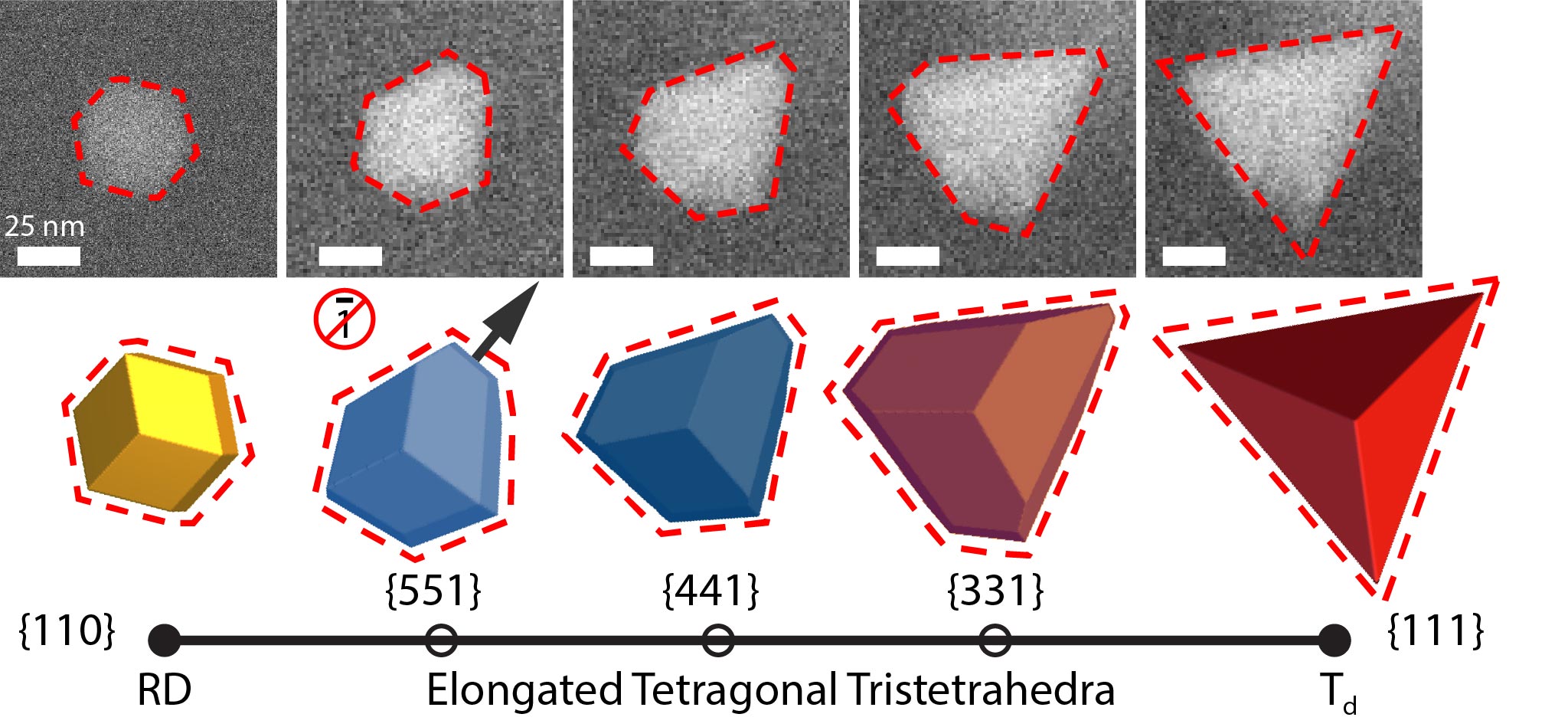
An illustration shows the progression of a gold seed to a crystalline, asymmetrical tetrahedron nanoparticle. The images were captured at Rice University through a technique known as liquid cell transmission electron microscopy. Credit: Jones Research Group/Rice University
Rice chemists discover mechanism in controlled growth of tetrahedron-shaped nanoparticles.
Nature clearly likes symmetry. Look at your own hands, for example. But sometimes nature produces asymmetric things, and the reasons aren’t always clear.
Rice University chemist Matthew Jones and his team have been seeking answers to such questions about useful nanoparticles — and now appear to have one.
