
| Date | 3rd, Dec 2021 |
|---|
Home > Press > Using green tea as reducing reagent for the preparation of nanomaterials to synthesize ammonia
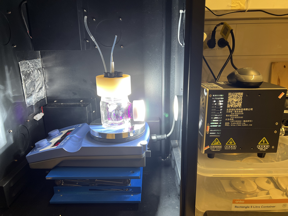 Scientists from UTS developed new method to prepare highly efficient photocatalysts for ammonia synthesis
CREDIT
An Feng, University of Technology Sydney
Scientists from UTS developed new method to prepare highly efficient photocatalysts for ammonia synthesis
CREDIT
An Feng, University of Technology Sydney
Abstract: Compare with bulk graphitic carbon nitride, the optimal sample had 2.93-fold photocatalytic nitrate reduction to ammonia activity (2.627 mg/h/gcat), and the NH3 selectivity increased from 50.77% to 77.9%. They published their approach on September 06 in the Energy Material Advances.
Beijing, China | Posted on December 3rd, 2021
With simple stir in green tea solution, some high-valent irons can be reduced to metals, which may significantly improve the photocatalytic activity of semiconductors. Herein, waste green tea bags were used to reduce the Ru3+, and the photocatalytic activity of the optimized sample was 2.93-fold as that of bulk g-C3N4 under simulated sunlight irradiation, according to corresponding author Bing-Jie Ni, professor at Centre for Technology in Water and Wastewater (CTWW), School of Civil and Environmental Engineering, University of Technology Sydney (UTS).
�Currently, ammonia is mainly produced via the Haber process, in which gaseous nitrogen and water gas are converted to ammonia under high temperature and high pressure with the assist of catalysts. Every year, the synthesis of ammonia consumes about 2% of global energy, leading to serious carbon dioxide emission. Thus, it is urgent to develop a green synthesis of ammonia under ambient conditions,� Ni said. �Using solar energy to covert nitrate to ammonia is of great significance, as it can not only eliminate the water pollutant, but also synthesize high-value chemicals.�
Ni and his team are working on the field of renewable energy production, particularly the interface between chemical engineering and environmental technology. They focus on the integration of these disciplines to develop innovative and sustainable technological solutions to achieve efficient energy generation from renewable resources.
�However, the reduction of nitrate to ammonia is really challenging in terms of kinetics and thermodynamics, as it is an eight-electron process with multiple steps.� Ni explained. �Based on experimental and theoretical studies, the introduction of Ru to g-C3N4 can not only boost the light absorption, the adsorption of nitrate, but also accelerate the separation of electron-hole pairs.
The thermodynamic energy barrier for the rate determining step in nitrate reduction to the ammonia process is calculated to be less than 0.75 eV, which is much lower than the competing hydrogen generation (0.98 eV) and nitrogen formation (1.36 eV), leading to the preference of generating ammonia.�
The results and findings of this work may provide a new platform for the facile and green synthesis of metal particle modified photocatalysts for reducing nitrate to ammonia under ambient conditions.
Other main contributors include Dr. Derek Hao, Dr. Jaiwei Ren, Prof. Ho Kyong Shon from Centre for Technology in Water and Wastewater, University of Technology Sydney, as well as A/Prof. Ying Wang affiliated with Changchun Institute of Applied Chemistry, Chinese Academy of Sciences.
This work is mainly supported by the Australian Research Council Future Fellowship (FT160100195), the National Key Research and Development Program of China (2016YFA0602900), the National Natural Science Foundation of China (21673220), Department of Science and Technology of Sichuan Province (2017GZ0051), and Jilin Province Science and Technology Development Program (20190201270JC, 20180101030JC).
###
Reference
Authors: Derek Hao,1 Jiawei Ren,1 Ying Wang,2 Hamidreza Arandiyan,3,4 Magnus Garbrecht,5 Xiaojuan Bai,6 Ho Kyong Shon,1 Wei Wei,1 and Bing-Jie Ni1
Title of original paper: A Green Synthesis of Ru Modified g-C3N4 Nanosheets for Enhanced Photocatalytic Ammonia Synthesis
Journal: Energy Material Advances
DOI: 10.34133/2021/9761263
Affiliations:
1Centre for Technology in Water and Wastewater (CTWW), School of Civil and Environmental Engineering, University of Technology Sydney (UTS), Sydney, NSW 2007, Australia
2State Key Laboratory of Rare Earth Resource Utilization, Changchun Institute of Applied Chemistry, Chinese Academy of Sciences, Changchun 130022, China
3Laboratory of Advanced Catalysis for Sustainability, School of Chemistry, The University of Sydney, Sydney 2006, Australia
4Centre for Advanced Materials & Industrial Chemistry (CAMIC), School of Science, RMIT University, Melbourne, VIC 3000, Australia
5Australian Centre for Microscopy and Microanalysis, The University of Sydney, Sydney 2006, Australia
6Beijing Engineering Research Center of Sustainable Urban Sewage System Construction and Risk Control, Beijing University of Civil Engineering and Architecture, Beijing 102612, China
About Dr. Derek Hao
Dr. Derek Hao received his bachelor's degree in materials chemistry from the School of Materials Science and Technology, China University of Geosciences, Beijing, in 2017. He previously studied as a visiting student at the Department of Chemistry, Tsinghua University, for 4 years. He finished his Ph.D. at Centre for Technology in Water and Wastewater (CTWW), University of Technology Sydney (UTS) in 2021. Currently, he is a Research Fellow at Centre for Catalysis and Clean Energy, Griffith University. His research interests include the synthesis and application of nanomaterials in energy and environmental areas. He is member of Royal Society of Chemistry, the Australian Water Association and the Australian Nano Network.
####
Contacts:Ning XuBeijing Institute of Technology Press Co., Ltd
Copyright © BEIJING INSTITUTE OF TECHNOLOGY PRESS CO., LTD
If you have a comment, please Contact us.
Issuers of news releases, not 7th Wave, Inc. or Nanotechnology Now, are solely responsible for the accuracy of the content.
Bookmark:


News and information
 �Fruitcake� structure observed in organic polymers June 3rd, 2022
Progressive Medicinal and Herbal Nanoscience for Targeted Drug Delivery Systems June 3rd, 2022
Artificial Intelligence Centered Cancer Nanomedicine: Diagnostics, Therapeutics and Bioethics June 3rd, 2022
Chemistry
Nanoscale chemically ordered-disordered domains in Fe3Pt alloys and their three-dimensional interface and lattice strain May 27th, 2022
Flexible quantum sieve made at TU Dresden filters the fuel of Starship Enterprise April 15th, 2022
Possible Futures
Nanoscale bowtie antenna under optical and electrical excitations June 3rd, 2022
Emerging vaccine nanotechnology June 3rd, 2022
�Fruitcake� structure observed in organic polymers June 3rd, 2022
Progressive Medicinal and Herbal Nanoscience for Targeted Drug Delivery Systems June 3rd, 2022
Discoveries
Nanoscale bowtie antenna under optical and electrical excitations June 3rd, 2022
Emerging vaccine nanotechnology June 3rd, 2022
�Fruitcake� structure observed in organic polymers June 3rd, 2022
Announcements
�Fruitcake� structure observed in organic polymers June 3rd, 2022
Progressive Medicinal and Herbal Nanoscience for Targeted Drug Delivery Systems June 3rd, 2022
Artificial Intelligence Centered Cancer Nanomedicine: Diagnostics, Therapeutics and Bioethics June 3rd, 2022
Interviews/Book Reviews/Essays/Reports/Podcasts/Journals/White papers/Posters
�Fruitcake� structure observed in organic polymers June 3rd, 2022
Progressive Medicinal and Herbal Nanoscience for Targeted Drug Delivery Systems June 3rd, 2022
Artificial Intelligence Centered Cancer Nanomedicine: Diagnostics, Therapeutics and Bioethics June 3rd, 2022
Environment
University of Strathclyde and National University of Singapore to co-ordinate satellite quantum communications May 13th, 2022
Lightening up the nanoscale long-wavelength optoelectronics May 13th, 2022
Energy
Engineering piezoelectricity and strain sensitivity in CdS to promote piezocatalytic hydrogen evolution May 13th, 2022
USTC found a pathway to high-quality ZnSe quantum wires April 8th, 2022
