
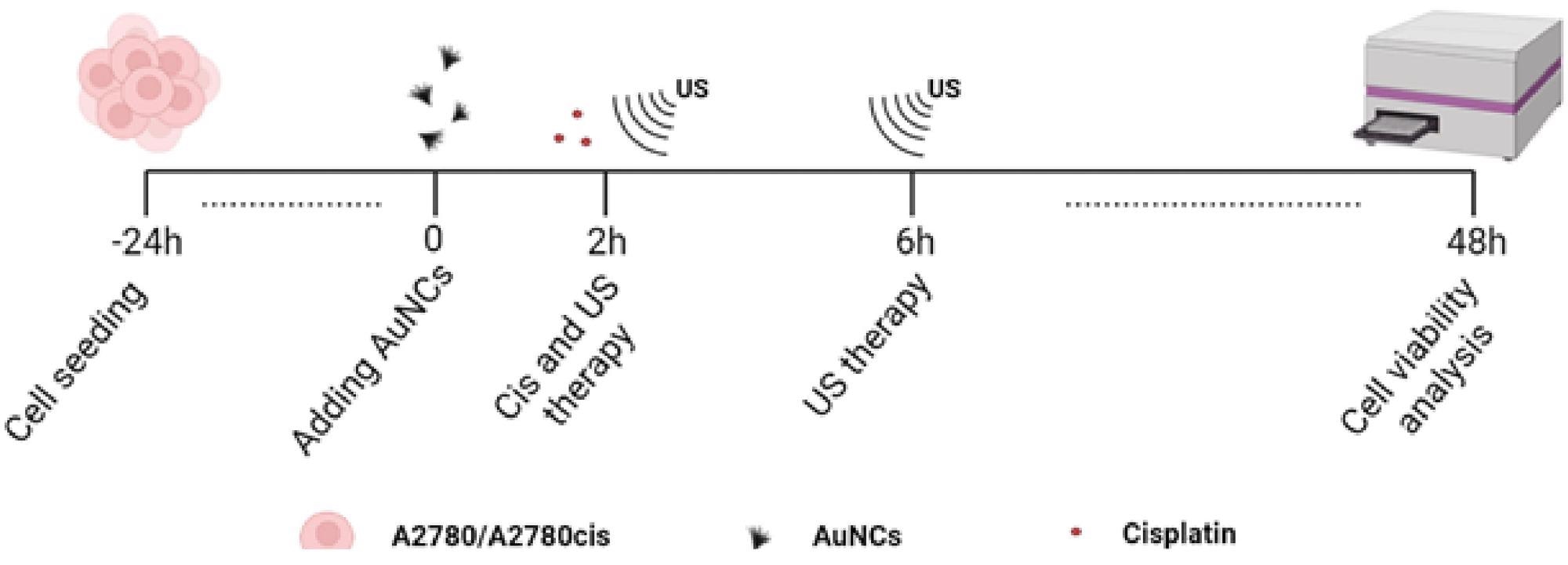
Novel research investigating triple combination therapy against ovarian cancer has been undertaken and published in the journal, Ultrasonics Sonochemistry. This exciting research utilized ultrasonic waves (US), gold nanocones (AuNCs) and cisplatin (Cis) in order to overcome drug resistance, a significant developmental area for effective recurrent cancer treatment.
Study: Triple-Combination Therapy Assisted with Ultrasound-Active Gold Nanoparticles and Ultrasound Therapy Against 3D Cisplatin-Resistant Ovarian Cancer Model. Image Credit: mi_viri/Shutterstock.com
Cancer Therapy Drug Resistance
Drug resistance within cancer therapy is a critical issue affecting the efficacy of treatments. To overcome this limitation, combination therapies have been investigated. This is especially significant in ovarian cancer as the probability of recurrence is higher because of late diagnoses due to symptoms being overlooked. Additionally, recurrent cancer may require a different type of chemotherapy if the first utilized a platinum-based chemotherapy treatment due to the tumor being deemed ‘platinum-resistant’.
Chemotherapy, a significant method of eradicating tumors and cancerous cells from patients through the use of toxic drugs, is a conventional treatment method that has since started to undergo advanced developments. While beneficial, chemotherapy drugs can have many side effects, such as systemic effects that can affect the whole body, including healthy non-cancerous tissue, leaving patients with conditions such as organ failure.
Another limitation of chemotherapy drugs is the development of chemo-resistant pathways – this issue is critical as it can be a major factor in mortality in recurrent ovarian cancer.
The limitations of conventional drug treatments for cancer have led to innovative developments such as research into chemo-resistant cells and having more specific therapeutic targets. Additionally, combination cancer therapies have garnered popularity over recent years to overcome the resistance of cancer cells to certain drugs that have enhanced efficacy by sensitizing cells to novel combinations as opposed to single treatments.
Ultrasound therapy (US) has already been established in the literature to show efficacy in enhancing chemotherapy within preclinical trials, illustrating its promise as a potential approach for overcoming drug resistance. Its effects include increasing the porosity of the cell membrane, being non-invasive, having no systemic toxicity, and high tissue penetration. These benefits can be seen as more effective than other clinical treatments such as photothermal and radiation therapy.
Additionally, research has found the use of US with chemotherapy drugs can aid in accumulating the drug in the cancer site, combatting resistance mechanisms with lower concentrations and shorter treatment duration being considered the most effective strategy.
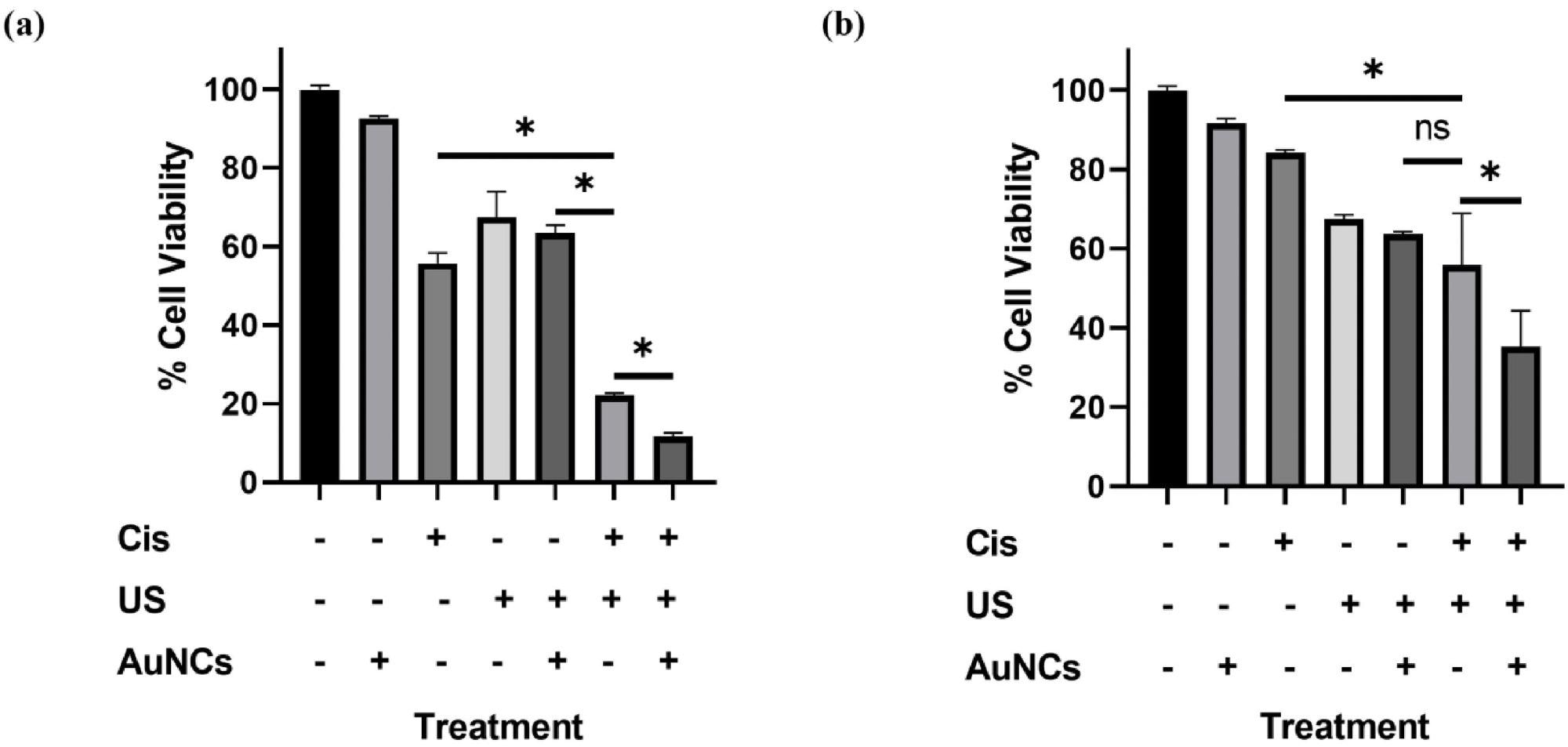
Effect of Cis, US, US+AuNCs, US + Cis, and US+AuNCs+Cis treatments on cell viability in A2780/A2780cis ovarian cancer cell lines. A2780 (a) and A2780cis (b) ovarian cancer cells were treated separately with Cis, US, US+AuNCs, US + Cis, and US+AuNCs+Cis combination therapy, and cell viability was analyzed with resazurin 2 days after treatments. (*p-values
