
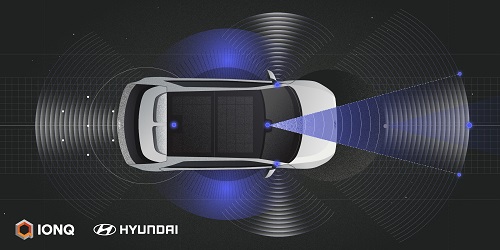
In a shared press release, the companies said that image classification and 3D object detection are foundational steps toward the next generation of mobilities, including autonomous vehicles. By encoding images into quantum states, IonQ said it is classifying 43 types of road signs using its quantum processors. The next phase of the project will see the two companies apply IonQ’s machine learning data to Hyundai’s test environment and simulate various real-world scenarios.
Aria features 20 algorithmic qubits. More efficient processing with lower costs will lead to the development of safer, more intelligent mobilities.
Earlier this year, IonQ and Hyundai Motor partnered to use quantum computing to advance effectiveness of next-generation batteries. Quantum-powered chemistry simulation is expected to enhance the quality of next-generation lithium batteries by making improvements to the devices’ charge and discharge cycles, as well as their durability, capacity, and safety. The partnership announced in January pairs IonQ’s expertise in quantum computing and Hyundai’s expertise in lithium batteries to create an advanced battery chemistry model on quantum computers, measured by the number of qubits and quantum gates.
