
Further, the substrate, called 4N-in-1, can be reused at least 20 times without loss of its Raman activity by simple photocatalytic degradation, the researchers said.
PIERS is an extension of the SERS method, which itself is widely considered for use in biochemistry, forensics, food safety, threat detection, and medical diagnostics. SERS extends the range of Raman applications to trace analysis, such as part-per-million-level detection of a pollutant in water or other liquids, for example.
To extend use of the method further into industrial and clinical use cases, inexpensive and reliable SERS substrates are needed to allow reproducible spectral signals.
The nanostructured and reusable substrate developed by the researchers led to 50 times more powerful analysis than classical SERS obtains.
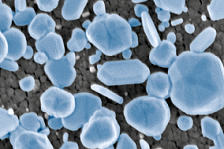
The researchers created a novel surface (4N-in-1) composed of nanocolumnar structures, nanocrack network, nanoscale mixed oxide phases, and nanometallic structures. This surface functioned as a PIERS substrate, and it enhanced the Raman signal and provided a high detection sensitivity.
In addition to the plasmonic nanostructures, the substrate is composed of an extremely active layer of titanium dioxide, study co-author Salih Veziroglu said.
The researchers look to transfer their findings from fundamental research into application; since the substrate can easily be combined with any type of Raman spectroscopy, they believe that the surface could be used for multiple, different applications. As they seek to bring the method to market, they plan to combine the method with AI to create a comprehensive database for materials analysis. This could enable faster and more precise detection of individual molecules.
Veziroglu’s research on the substrate materials was partly funded with a grant from Kiel Nano, Surface, and Interface Science (KiNSIS), a priority research area of Kiel University.
The research was published in Small (www.doi.org/10.1002/smll.202270271).
