
| Date | 11th, Apr 2023 |
|---|
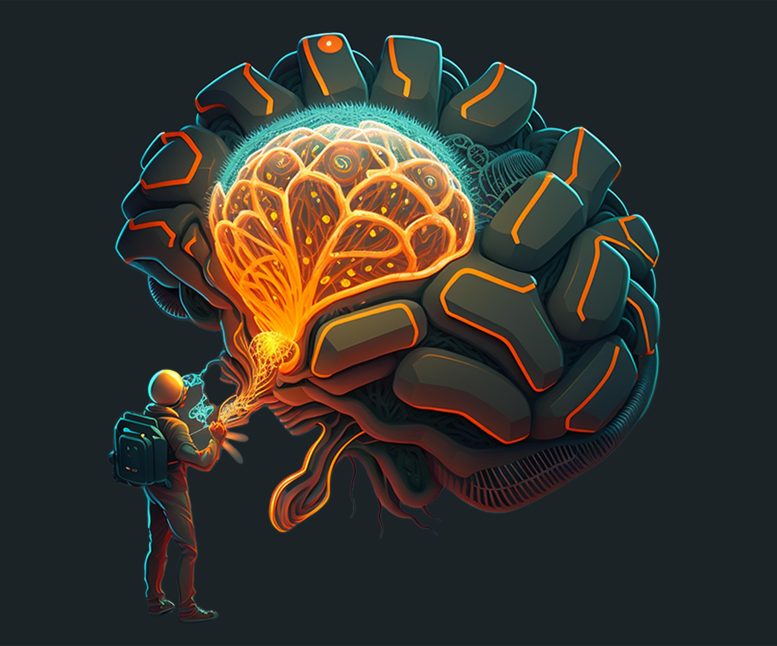
Artistic rendering illustrating how the mechanical nanosurgery, a new approach developed by SickKids and University of Toronto researchers, targets cancer cells from inside the tumor, sparing healthy tissue in the process. Credit: Created by The Hospital for Sick Children (SickKids) research team using Midjourney
Mechanical nanosurgery, a new approach developed by scientists at The Hospital for Sick Children and the University of Toronto, uses magnetic carbon nanotubes to target and destroy chemoresistant glioblastoma cells. The technique has potential applications in treating other cancer types by changing the antibody coating.
Scientists at The Hospital for Sick Children (SickKids) and the University of Toronto (U of T) have combined forces to develop a new approach to potentially treat tumor cells, called mechanical nanosurgery, even for aggressive, chemoresistant cancers.
Glioblastoma (GBM) is the most common and aggressive primary brain cancer. Despite various treatment options that exist, including surgery, radiotherapy, and chemotherapy, the median survival time for patients is only around 15 months.
The current global standard-of-care treatment for GBM patients includes chemotherapy using a drug called temozolomide (TMZ), which extends a person’s life expectancy by approximately two months compared to patients receiving radiotherapy alone. However, GBM cells can develop resistance to TMZ over time, reducing its efficacy and increasing the likelihood of tumor relapse.
In a study published on March 29 in the journal Science Advances, Dr. Xi Huang, a Senior Scientist in the Developmental & Stem Cell Biology program at SickKids, and Dr. Yu Sun, Professor of Mechanical Engineering and Director of the Robotics Institute at U of T, present a new approach to treat chemoresistant GBM using precision magnetic control in a process they call mechanical nanosurgery.
